Products
How to Choose and Use a Moisture Meter
A moisture meter can help you investigate damp — but only if you understand what it is really measuring. Here is the difference between pin and pinless, and how to read the results sensibly.
Disclosure: Some links may be affiliate links. If you buy through them we may earn a commission at no extra cost to you. This never affects which products we feature. Recommendations are based on published specifications and research, not hands-on lab testing. See our affiliate disclosure.
In short
Moisture meters come in two main types: pin-type, which measure electrical resistance between two prongs pushed into a material, and pinless, which use a scanning pad to read moisture below the surface without marking it. Both are useful for comparing areas, but their readings are affected by salts, surface finishes and material type — so treat the numbers as relative indicators, not absolute proof of a damp cause.
Key takeaways
- Pin-type meters measure resistance between two prongs; pinless meters scan below the surface.
- Pin meters leave tiny holes; pinless meters are non-invasive but read a shallow depth.
- Readings are relative — compare a suspect area against a known dry area.
- Salts, metal, foil-backed plaster and surface damp can all distort readings.
- A high reading tells you moisture is present, not where it is coming from.
A moisture meter estimates how much moisture is in a material such as plaster, timber or masonry. It is a genuinely useful investigative tool, but it is also one of the most misread instruments in damp diagnosis — so it pays to understand what it does and does not tell you.
This guidance is based on published specifications and general research, not our own testing.
Pin-type vs pinless
Pin-type (resistance) meters
A pin-type meter has two sharp prongs that you push into the material. It measures the electrical resistance between them — wetter material conducts more easily, so lower resistance reads as higher moisture. They are good for pinpointing a spot and for reading into timber, but they leave small pin holes and only measure between the prongs.
Pinless (capacitance) meters
A pinless meter has a flat sensing pad that you hold against the surface. It reads moisture in a shallow layer below the surface without marking it, which makes it ideal for scanning a wall quickly to compare areas. The trade-offs are that it only reads to a limited depth and can be thrown off by what lies just behind the surface.
| Feature | Pin-type | Pinless |
|---|---|---|
| How it reads | Resistance between two prongs | Capacitance below a sensing pad |
| Invasive? | Yes — leaves small holes | No — non-marking |
| Best use | Pinpointing a spot, timber | Scanning and comparing wall areas |
| Depth | Between the pin tips | Shallow layer below the surface |
This compares the two categories by how they work and their intended use; there are no scores or prices.
Interpreting readings — carefully
This is where most mistakes happen. A moisture meter gives a relative indication, not a definitive measurement of a damp problem.
- Compare, don't fixate. Take a reading on a suspect area, then on an area you know is dry, and compare. A difference is more meaningful than a single number.
- Salts distort readings. Hygroscopic salts (common in old plaster and in walls affected by rising damp) attract moisture and conduct electricity, which can push a pin meter's reading up even when the wall is not structurally wet.
- Hidden materials matter. Metal, foil-backed plasterboard, pipes and wiring can all affect a pinless reading.
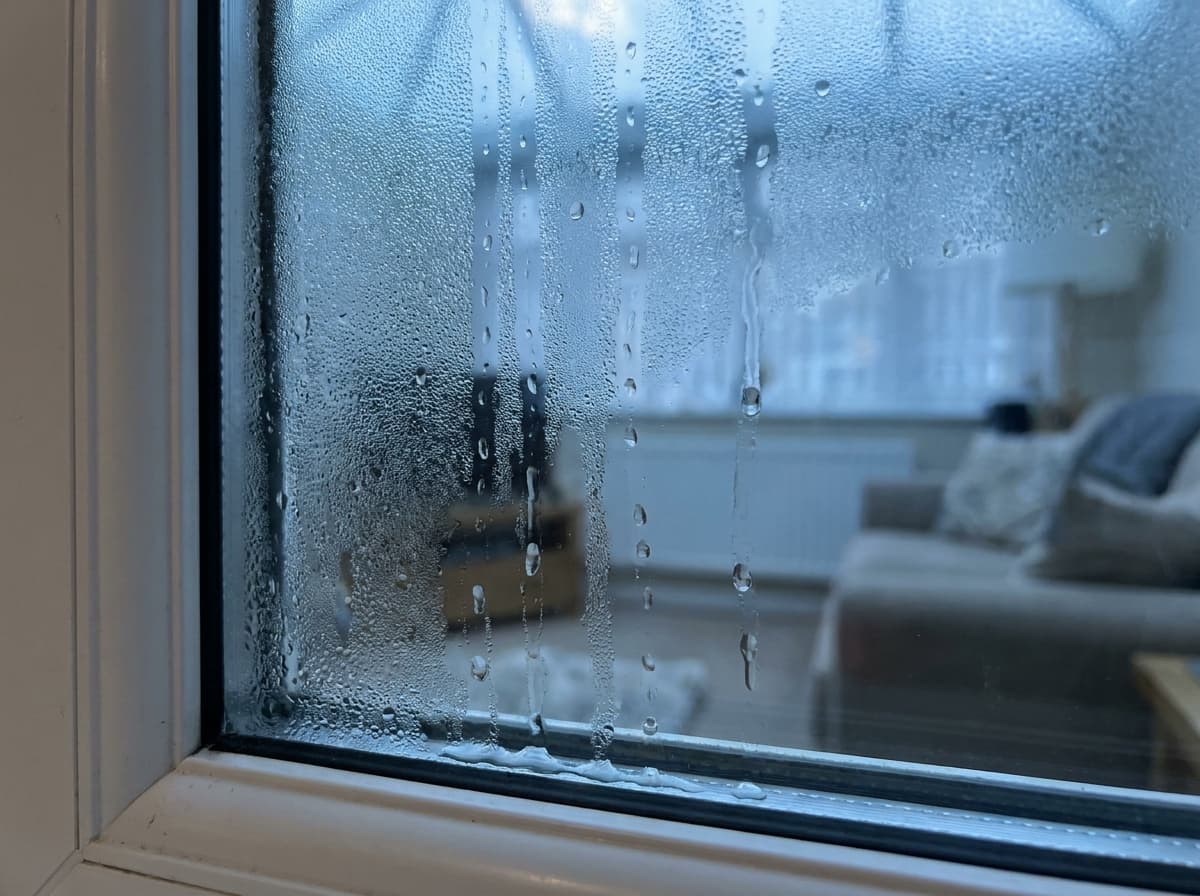
- Surface condensation reads as "damp". A cold wall with surface condensation can give a high reading that has nothing to do with rising or penetrating damp.
Important
A high meter reading does not prove rising damp, and it certainly does not justify expensive treatment on its own. Be wary of any diagnosis that rests on meter readings alone — especially from a company selling the remedy. A sound diagnosis considers the readings alongside the pattern, location and history of the damp.
Features worth having
- A clear display with a relative scale or colour band, not just a raw number.
- Both modes in one tool (some meters combine pin and pinless).
- A calibration check so you can confirm the meter is working.
Putting it to use
Use the meter to map where moisture is and is not, then read that alongside the wider picture. For a structured approach to working out the type of damp you have, see our damp diagnosis tool and the guidance on telling condensation, penetrating and rising damp apart.
Frequently asked questions
A pin-type meter measures electrical resistance between two prongs pushed into the material and is good for pinpointing a spot. A pinless meter scans a shallow layer below the surface without marking it, which suits quickly comparing areas across a wall.
DampSense Editorial Team
Research & editorial
Our editorial team researches UK building-moisture topics using government guidance, public-health sources and established building-science references. We write to help homeowners and tenants make informed decisions, and we flag where professional assessment is needed.
Credentials & limitations: Research-led editorial team. We are not chartered surveyors; our guides are general information, not a professional building survey.