Condensation
How to Stop Condensation on Windows
Window condensation is the most visible sign of too much moisture and cold glass. Here is why it happens and a practical, step-by-step way to stop it.
In short
Stop condensation on windows by reducing indoor moisture, improving ventilation and keeping the glass warmer. Open trickle vents, use extractor fans when cooking and bathing, avoid drying washing on radiators, keep a low background heat, and wipe droplets away each morning before they feed mould on the frames and seals.
Key takeaways
- Window condensation means the glass is colder than the dew point of the room air.
- Internal condensation is a moisture-and-ventilation problem you can fix; condensation between double-glazing panes means the sealed unit has failed.
- Ventilation, consistent heating and cutting moisture at source are the three levers that work.
- Wipe droplets away promptly to protect frames, seals and plaster from mould.
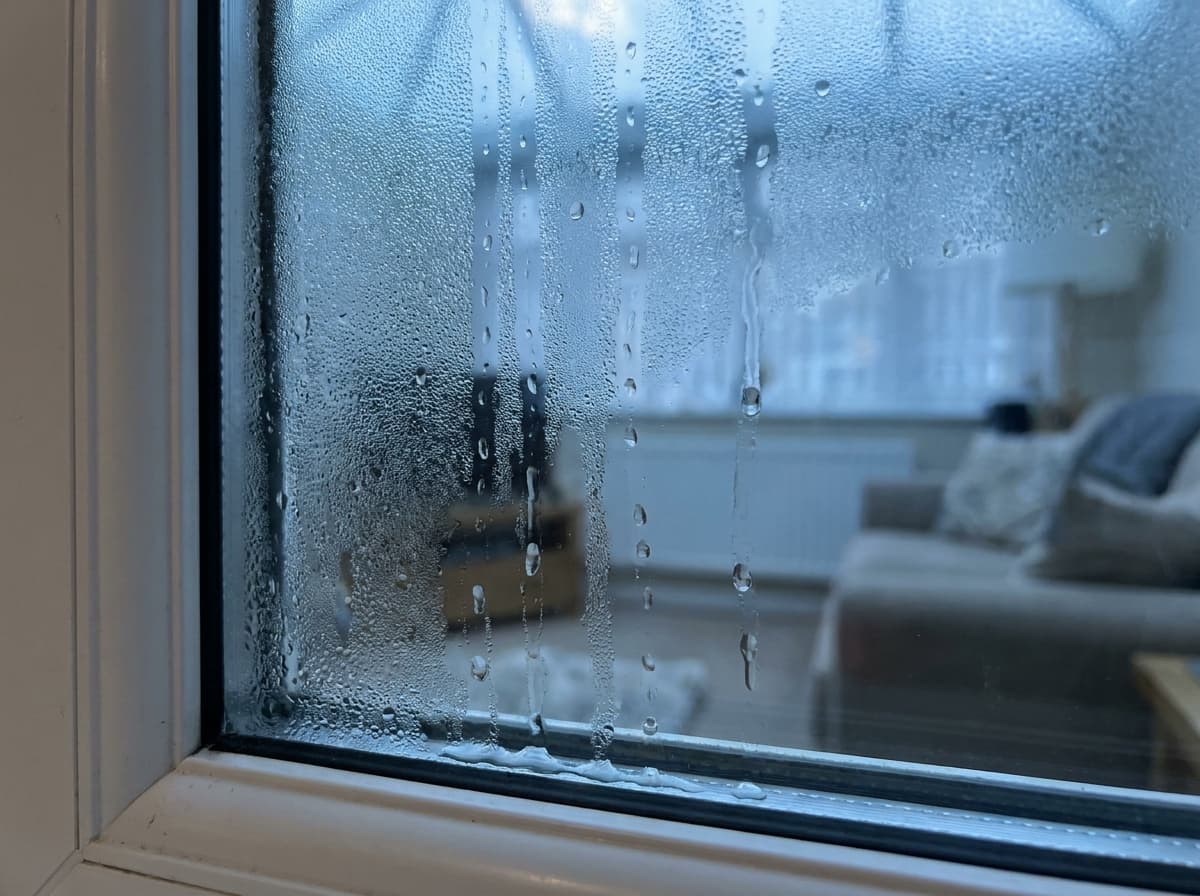
Waking up to windows running with water is one of the clearest signs of a condensation problem. The good news is that glass is usually the coldest surface in a room, so it shows the problem first — which makes it an excellent early warning and an easy place to start.
Why condensation forms on glass
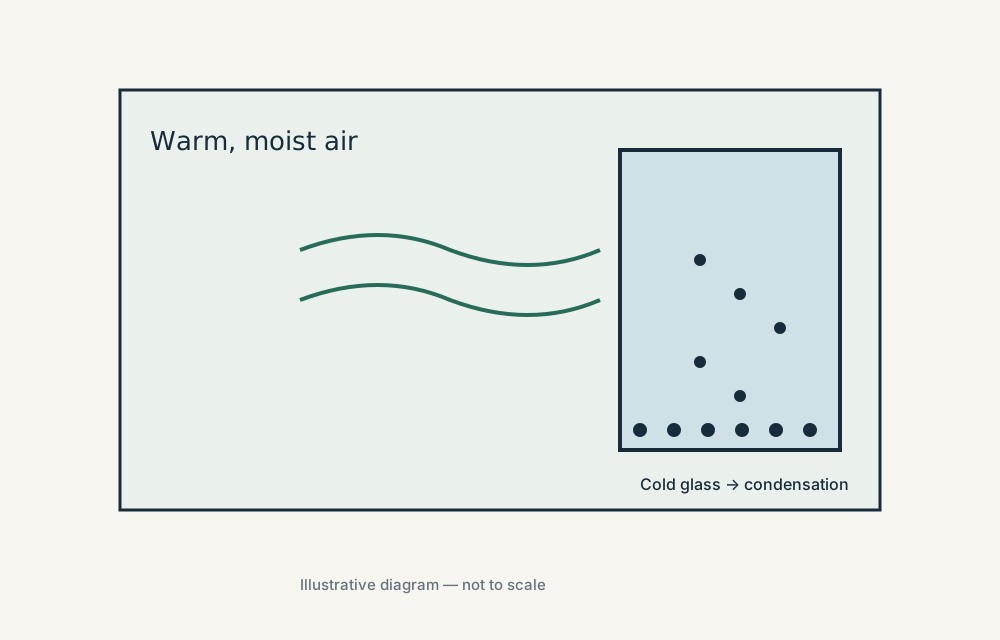
Window glass — especially older single glazing or cold aluminium frames — is typically the coldest surface in a room. When warm, humid indoor air touches it, the air cools below its dew point and releases water onto the pane. For the full mechanism, see what causes condensation.
The pattern tells you a lot:
- Water on the inside of the glass is ordinary room condensation — the type you can control.
- Water on the outside (on a cold, clear morning) is harmless and actually a sign of efficient glazing.
- *Misting between the two panes* of a double-glazed unit means the sealed unit has failed and needs replacing — no amount of ventilation will fix that.
Note
A quick way to sense how close you are to the problem is to compare your room's humidity and temperature against the dew point. Try the dew point calculator and keep an eye on trends with the humidity tracker.
Step-by-step: how to stop it
- Ventilate first thing. Open windows or trickle vents for a short burst in the morning to let the overnight moisture out. Even ten minutes makes a real difference.
- Use extractor fans. Run the fan — or open a window — while cooking, showering and bathing, and leave it on for a while afterwards.
- Contain moisture at source. Put lids on pans, vent your tumble dryer outside, and dry washing outdoors or in a well-ventilated room with the door shut and a window open.
- Keep a low, steady background heat. Warm glass is less likely to drop below the dew point than glass in a room that is freezing cold between short bursts of heating.
- Keep curtains and blinds off the glass overnight. Heavy curtains trap a pocket of cold, humid air against the pane. Leaving a gap lets warm room air reach the glass.
- Wipe droplets away each morning. Use a window vacuum or a cloth. This stops water pooling on the frames and seals where mould takes hold.
Keeping the glass warmer
Cold glass is half the problem. Where practical:
- Upgrade single glazing to double or secondary glazing.
- Replace failed double-glazed units (the misted ones).
- Add thermal-lined curtains that you draw back off the glass by day.
These reduce how cold the surface gets, raising it above the dew point for more of the day.
When it keeps coming back
If you have ventilated, heated and reduced moisture and the windows still stream, the room is simply carrying too much moisture for its ventilation to cope with. Consider a dehumidifier for persistent cases, and check whether an extractor fan is actually clearing air to the outside rather than just stirring it around. Our guide to stopping condensation covers the whole-home approach.
Try a related tool
Frequently asked questions
No. Misting sealed between the two panes means the unit's seal has failed and moisture has got inside. Ventilation and heating will not help — the sealed glazing unit needs replacing.
Sources
- GOV.UK: Understanding and addressing the health risks of damp and mould in the home · England · accessed 27 October 2026
DampSense Editorial Team
Research & editorial
Our editorial team researches UK building-moisture topics using government guidance, public-health sources and established building-science references. We write to help homeowners and tenants make informed decisions, and we flag where professional assessment is needed.
Credentials & limitations: Research-led editorial team. We are not chartered surveyors; our guides are general information, not a professional building survey.