Condensation
How to Stop Condensation for Good
Stopping condensation is about tipping the balance between moisture, temperature and ventilation back in your favour. Here is the complete, practical method.
In short
To stop condensation, attack all three causes at once: reduce the moisture you add to the air, ventilate so humid air is replaced with drier air, and heat the home consistently so surfaces stay above the dew point. A dehumidifier helps in stubborn cases where ventilation alone cannot keep up.
Key takeaways
- There is no single fix — you tackle moisture, ventilation and heating together.
- Short, frequent ventilation bursts clear humid air without wasting much heat.
- Consistent low background heat beats short, intense blasts for keeping surfaces warm.
- Drying washing indoors is one of the biggest hidden moisture sources.
- A dehumidifier is a useful tool for persistent problems, not a substitute for ventilation.
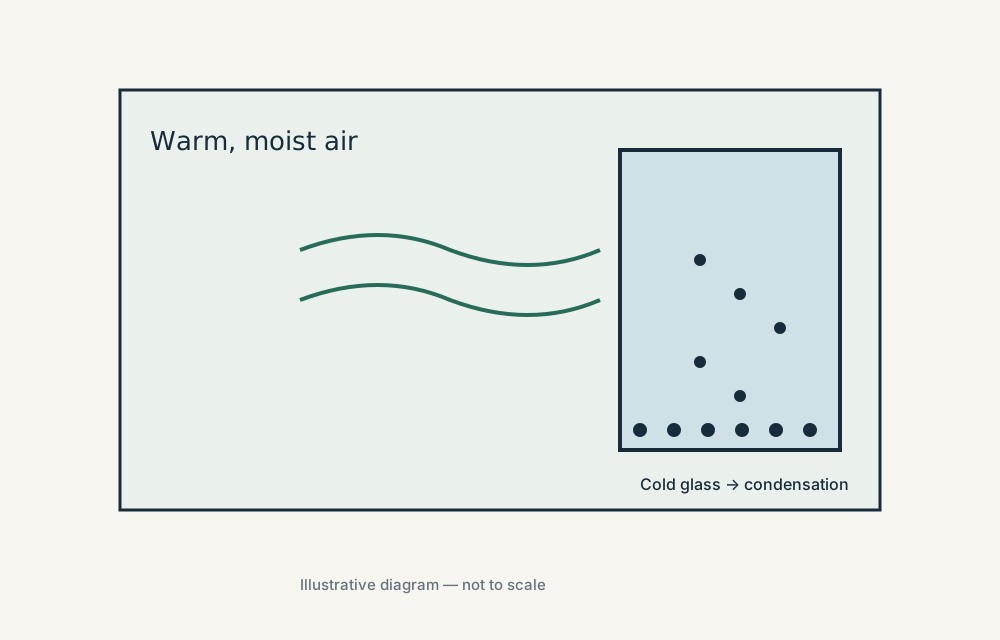
Condensation is a balancing act between three things: how much moisture is in the air, how warm your surfaces are, and how well humid air is cleared away. Fix it properly and you address all three. Here is the complete method, roughly in order of impact and ease.
1. Reduce the moisture you create
You cannot stop living in your home, but you can contain the moisture everyday life produces.
- Cook with lids on pans and use the extractor hood or an open window.
- Dry washing outdoors whenever you can. If you must dry indoors, do it in one room with the door closed and a window or vent open.
- Vent your tumble dryer outside, or use a self-condensing model that is properly emptied.
- Shut the bathroom and kitchen doors while bathing and cooking so moisture does not spread through the house.
Drying clothes on radiators is one of the single biggest moisture sources in a typical home — a wet load releases litres of water straight into the air.
2. Ventilate — replace humid air with drier air
Ventilation carries moisture out before it can condense.
- Open trickle vents and keep them open, especially in bedrooms.
- Burst-ventilate by opening windows wide for a short period each morning rather than leaving one cracked all day.
- Run extractor fans in the kitchen and bathroom during and after moisture-producing activities.
- Keep furniture a short distance from external walls so air can move behind it.
Tip
Short, sharp ventilation loses less heat than you might think, because you are flushing out humid air without cooling the walls and furniture. The dry air coming in warms up quickly.
3. Heat the home consistently
Warm surfaces stay above the dew point, so condensation cannot form on them.
A low, steady background temperature usually works better than letting the house go cold and then blasting the heating for an hour. With intermittent heating, walls and windows stay cold for long stretches and collect moisture during every gap. Gentle, consistent warmth — particularly in rooms that are normally cold, like spare bedrooms — keeps surfaces out of the danger zone.
Aim to keep indoor relative humidity in a comfortable range. A level commonly cited as comfortable is roughly 40–60% as general guidance; above that, condensation and mould become much more likely. See ideal indoor humidity for how to measure and interpret it.
4. Use a dehumidifier for stubborn cases
Where ventilation alone cannot keep up — a flat with limited airflow, a room where washing must be dried indoors — a dehumidifier pulls moisture straight out of the air.
- A refrigerant dehumidifier works well in normal room temperatures and is efficient for everyday use.
- A desiccant dehumidifier copes better in cold spaces such as garages and unheated rooms.
Running costs vary with the model and how long it runs. Estimate yours with the dehumidifier running cost calculator before you buy, and track whether it is actually bringing humidity down with the humidity tracker.
Important
A dehumidifier manages symptoms, not causes. If you find it running constantly, something is adding more moisture than the room can handle — revisit steps 1 to 3 first.
Putting it together
Most homes do not need expensive work. A combination of lids-on cooking, extractor fans, daily burst ventilation, a steady background temperature and sensible indoor drying transforms the vast majority of condensation problems. Reserve dehumidifiers and glazing upgrades for the cases that resist the basics.
If problems persist in one specific spot rather than generally, double-check you are not actually dealing with a leak — compare the signs in condensation vs damp.
Try a related tool
Frequently asked questions
It helps considerably, but it works best alongside ventilation, consistent heating and reducing moisture at source. If a dehumidifier runs non-stop, the room is producing more moisture than it can remove — tackle the sources too.
Sources
- GOV.UK: Understanding and addressing the health risks of damp and mould in the home · England · accessed 27 October 2026
- Energy Saving Trust: Energy Saving Trust · UK · accessed 27 October 2026
DampSense Editorial Team
Research & editorial
Our editorial team researches UK building-moisture topics using government guidance, public-health sources and established building-science references. We write to help homeowners and tenants make informed decisions, and we flag where professional assessment is needed.
Credentials & limitations: Research-led editorial team. We are not chartered surveyors; our guides are general information, not a professional building survey.