Damp
The Signs of Damp to Look Out For
A checklist of the visual and sensory signs of damp, and what each one tends to point towards.
In short
Common signs of damp include a musty smell, black mould in corners or on cold walls, water droplets on windows, peeling paint or wallpaper, tide marks low on walls, salt deposits, and stained patches that grow after rain. The pattern of signs helps indicate whether the cause is condensation, penetrating or rising damp.
Key takeaways
- A musty smell is often the first sign, before anything is visible.
- The pattern and location of signs points to the likely cause.
- Peeling paint, bubbling plaster and crumbling skirting indicate sustained moisture.
Damp often announces itself before it is obvious. Learning to read the signs — and what each tends to mean — helps you act early and point an inspection in the right direction.
Signs you can see
- Black spot mould, especially in corners, on cold external walls and behind furniture → usually condensation.
- Water droplets or streaks on windows, worse in the morning → condensation.
- A defined damp patch that darkens after rain → penetrating damp.
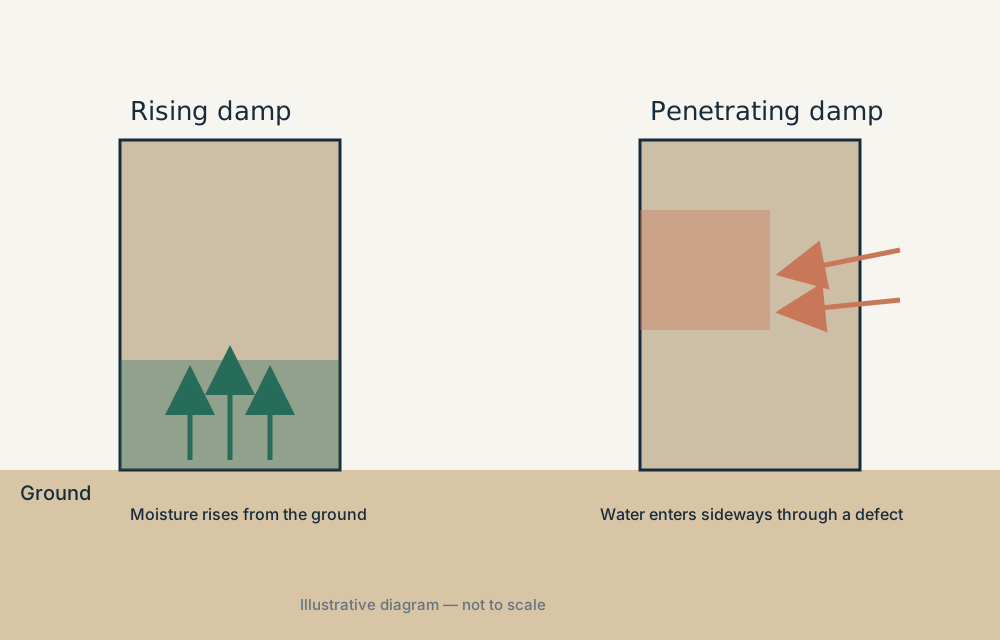
- A horizontal tide mark low on the wall, with white salt deposits → possible rising damp.
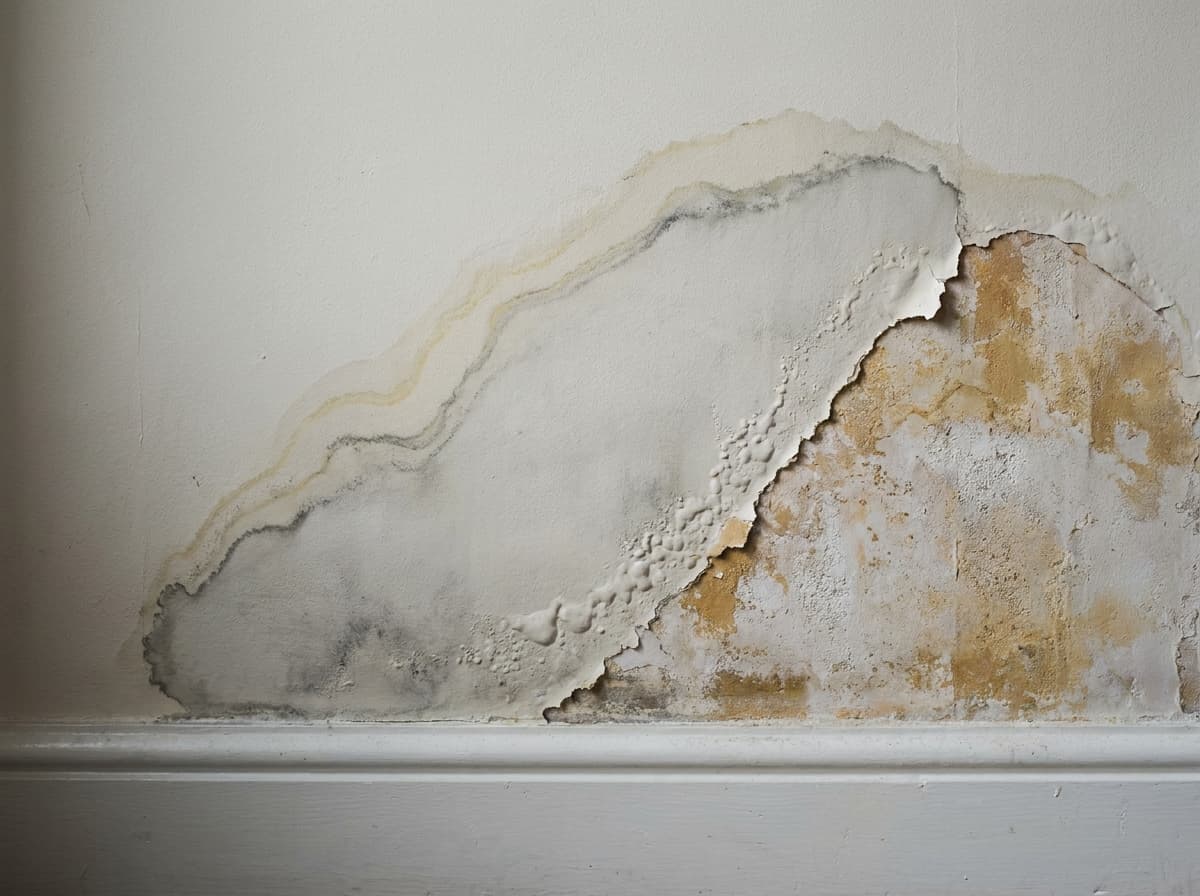
- Peeling paint, blistered or "blown" plaster, lifting wallpaper → sustained moisture of some kind.
- Rotting or crumbling skirting boards and timber → long-standing moisture.
- Brown staining on a ceiling → a leak from above (roof, plumbing).
Signs you can smell
A musty, earthy smell is often the earliest sign and may appear before any visible mark — for example in a wardrobe against a cold wall, or in a little-used room. Do not simply mask it; find the moisture source.
What the pattern tells you
| Sign | Points towards |
|---|---|
| Droplets on glass | Condensation |
| Mould in cold corners | Condensation |
| Patch worse after rain | Penetrating damp |
| Tide mark + salts low down | Possible rising damp |
| Ceiling stain | Leak from above |
Tip
Photograph and date any signs of damp, especially if you rent. A record of how a patch changes over weeks (and with the weather) is genuinely useful for diagnosis — and important evidence if you need to report the problem to a landlord.
If you are seeing several of these signs, use the Damp Diagnosis Assistant to structure what you have found, then read the relevant hub.
Try a related tool
Frequently asked questions
Not always, but a persistent musty smell nearly always means there is excess moisture somewhere, and mould is a common companion. Find and fix the moisture rather than masking the smell with fragrances.
Sources
- NHS: Can damp and mould affect my health? · UK · accessed 27 October 2026
DampSense Editorial Team
Research & editorial
Our editorial team researches UK building-moisture topics using government guidance, public-health sources and established building-science references. We write to help homeowners and tenants make informed decisions, and we flag where professional assessment is needed.
Credentials & limitations: Research-led editorial team. We are not chartered surveyors; our guides are general information, not a professional building survey.