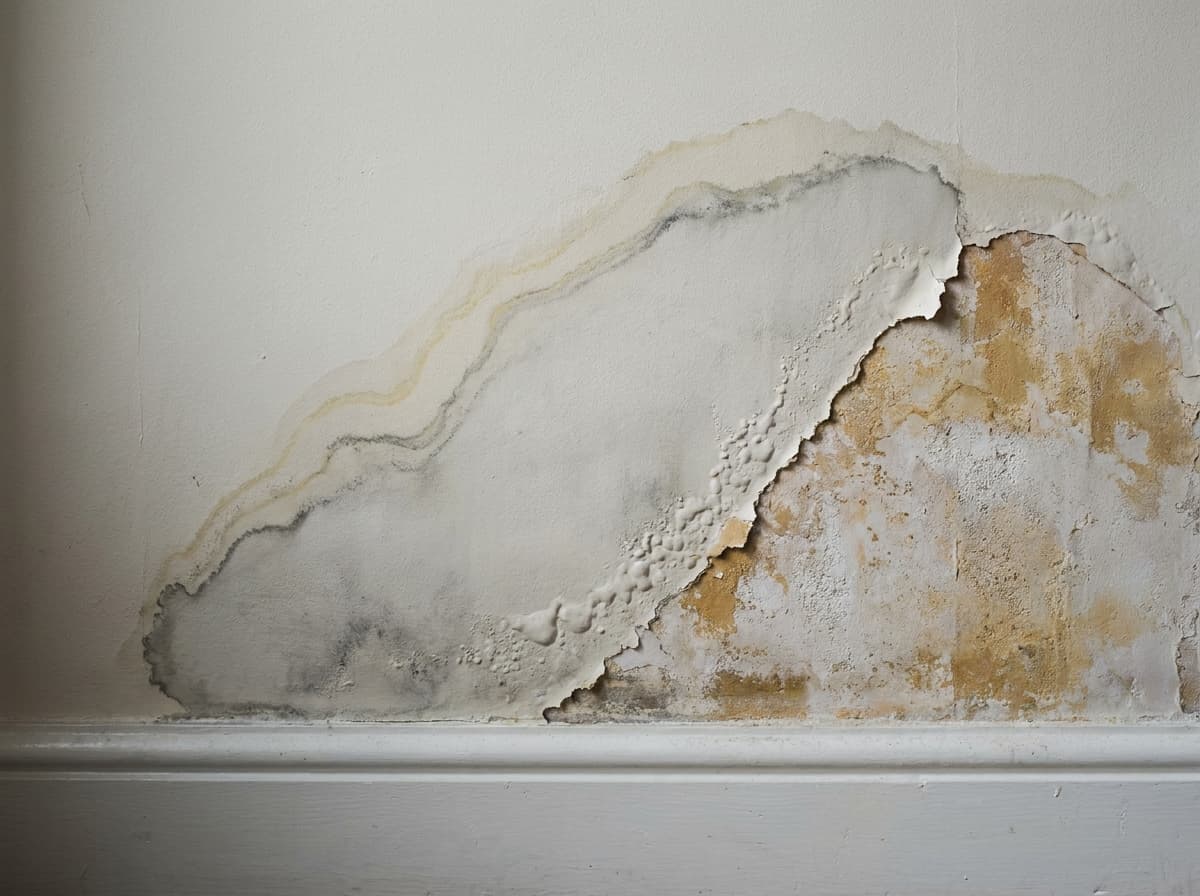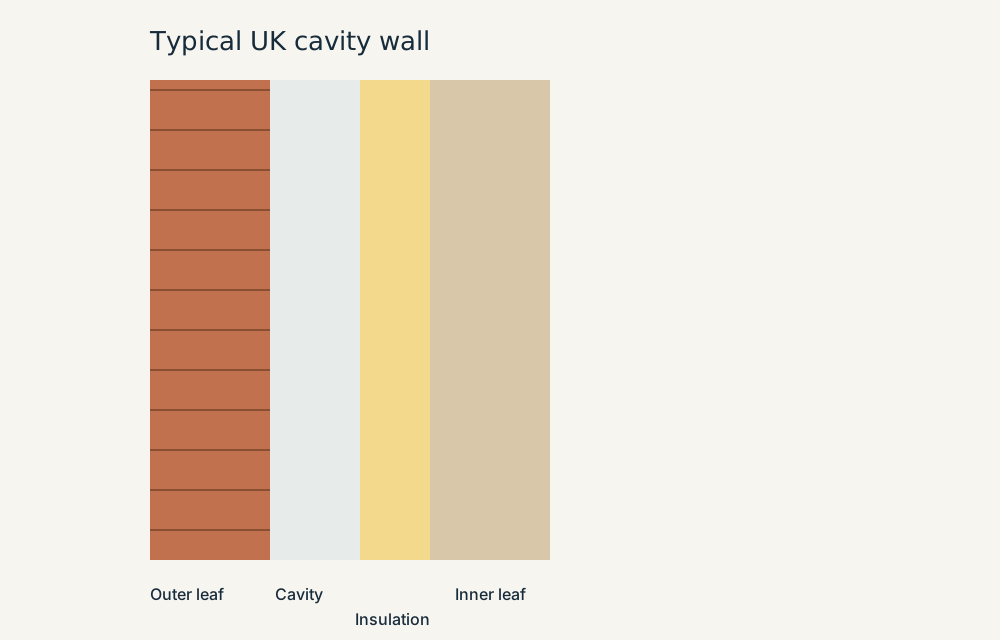
Damp
How to Identify Different Types of Damp
A side-by-side comparison of the three main types of damp, the signs of each, and a practical process for identifying which one you have.
In short
The three types of damp are condensation, penetrating damp and rising damp. Condensation appears on cold surfaces and is worse in winter; penetrating damp is a localised patch that worsens after rain; rising damp appears low on walls with a tide mark. Identify the type by looking at location, timing and whether rain makes it worse.
Key takeaways
- Use three clues to tell damp types apart: location, timing and response to rain.
- More than one type can occur in the same home.
- A moisture meter alone cannot distinguish the cause — context matters.
Identifying the type of damp is the first and most important step, because the cure depends on the cause. This guide sets the three types side by side and gives you a practical process to narrow it down.
Condensation
- Where: cold external walls, window reveals, cold corners, behind furniture, in unheated rooms.
- When: worse in winter and in the mornings; linked to cooking, bathing and drying washing indoors.
- Signs: water on glass, black spot mould, a general musty feel rather than a single wet patch.
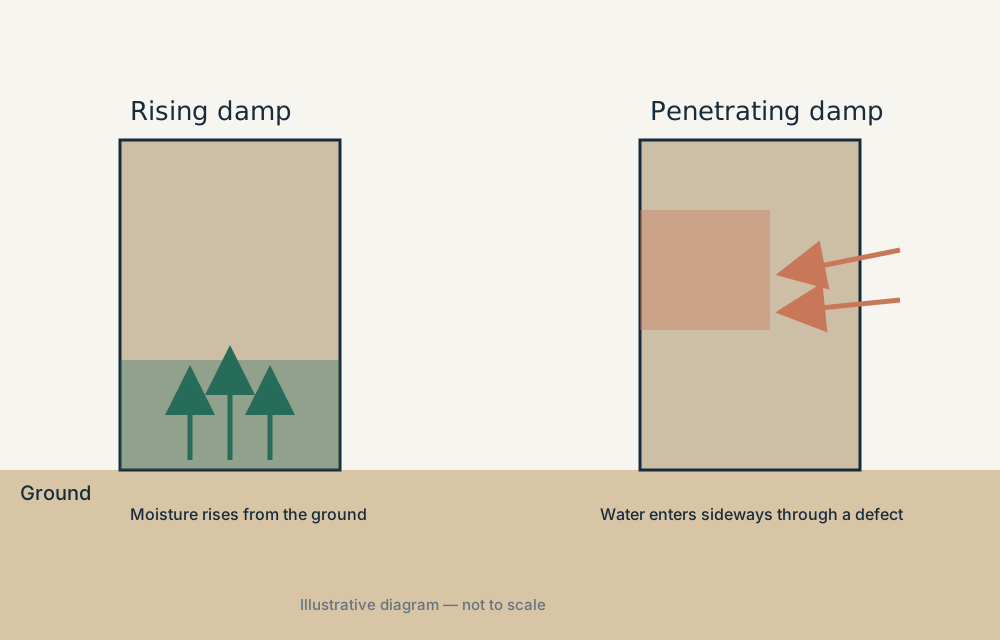
Penetrating damp
- Where: a localised patch, which can be anywhere on a wall or ceiling, often near an external defect.
- When: worse during and after rain; the patch may expand and contract with the weather.
- Signs: a defined damp mark, sometimes with staining; often traceable to a leaking gutter, cracked render or roof fault.
Rising damp
- Where: low on ground-floor walls, typically no higher than about a metre.
- When: fairly constant, not strongly linked to rain.
- Signs: a horizontal "tide mark", salt deposits, damaged skirting and plaster.
A practical identification process
- Note the location. Low down near the skirting, a specific patch, or on cold surfaces and corners?
- Note the timing. Worse after rain (points to penetrating)? Worse in cold mornings (points to condensation)?
- Look for droplets. Water on windows strongly suggests condensation.
- Check outside. Overflowing gutters, cracked render, high ground levels or bridged DPCs all point to a specific cause.
- Rule things out before spending. Especially before agreeing to chemical DPC injection.
Note
A moisture meter reading on its own does not tell you the cause of damp — only that moisture is present. Readings must be interpreted alongside location, timing and building context.
Still unsure? Work through the Damp Diagnosis Assistant, then read the dedicated hub for the most likely cause.
Try a related tool
Frequently asked questions
Yes, and it is common. For example, a property can have condensation in the bedrooms and penetrating damp from a failed gutter on one external wall at the same time.
Sources
- GOV.UK: Understanding and addressing the health risks of damp and mould in the home · England · accessed 27 October 2026
DampSense Editorial Team
Research & editorial
Our editorial team researches UK building-moisture topics using government guidance, public-health sources and established building-science references. We write to help homeowners and tenants make informed decisions, and we flag where professional assessment is needed.
Credentials & limitations: Research-led editorial team. We are not chartered surveyors; our guides are general information, not a professional building survey.