Penetrating Damp
The Causes of Penetrating Damp
From blocked gutters to worn pointing and leaking chimneys, here are the external defects that let penetrating damp into UK homes.
In short
Penetrating damp is caused by external defects that let water through the building fabric. The usual culprits are blocked or broken gutters and downpipes, roof faults such as slipped tiles and failed flashing, cracked or hollow render, worn or missing mortar pointing, and leaking chimneys. Each creates a route for rainwater to reach the inside, and fixing that route is the only lasting cure.
Key takeaways
- Rainwater goods — gutters and downpipes — are the most common single cause.
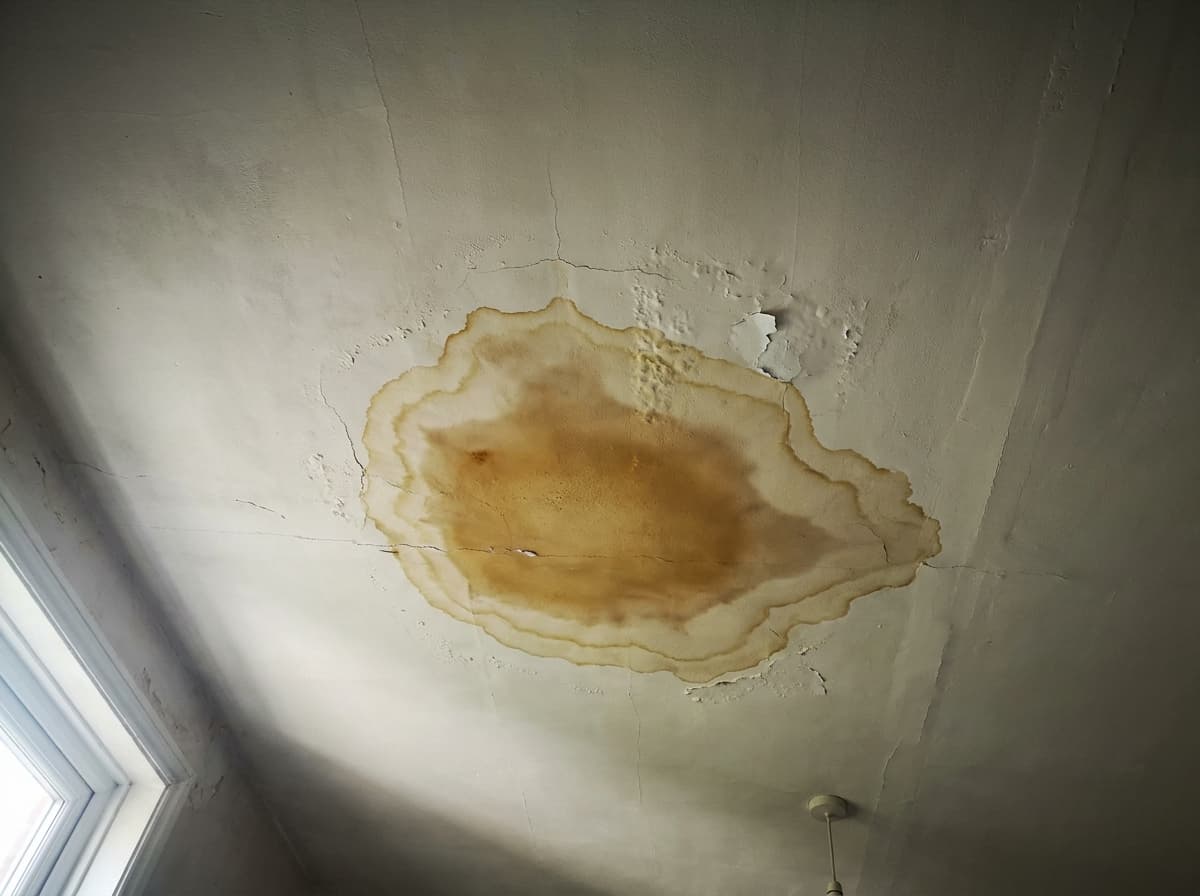
- Roof defects and failed flashing let water in high up, often showing on ceilings.
- Cracked render and worn pointing let driving rain soak through walls.
- Chimneys are a frequent, easily overlooked source of ceiling and upper-wall damp.
Penetrating damp always has a physical cause on the outside of the building. Track down the defect and you have found the cure. Here are the usual suspects, roughly in order of how often they are to blame.
Gutters and downpipes
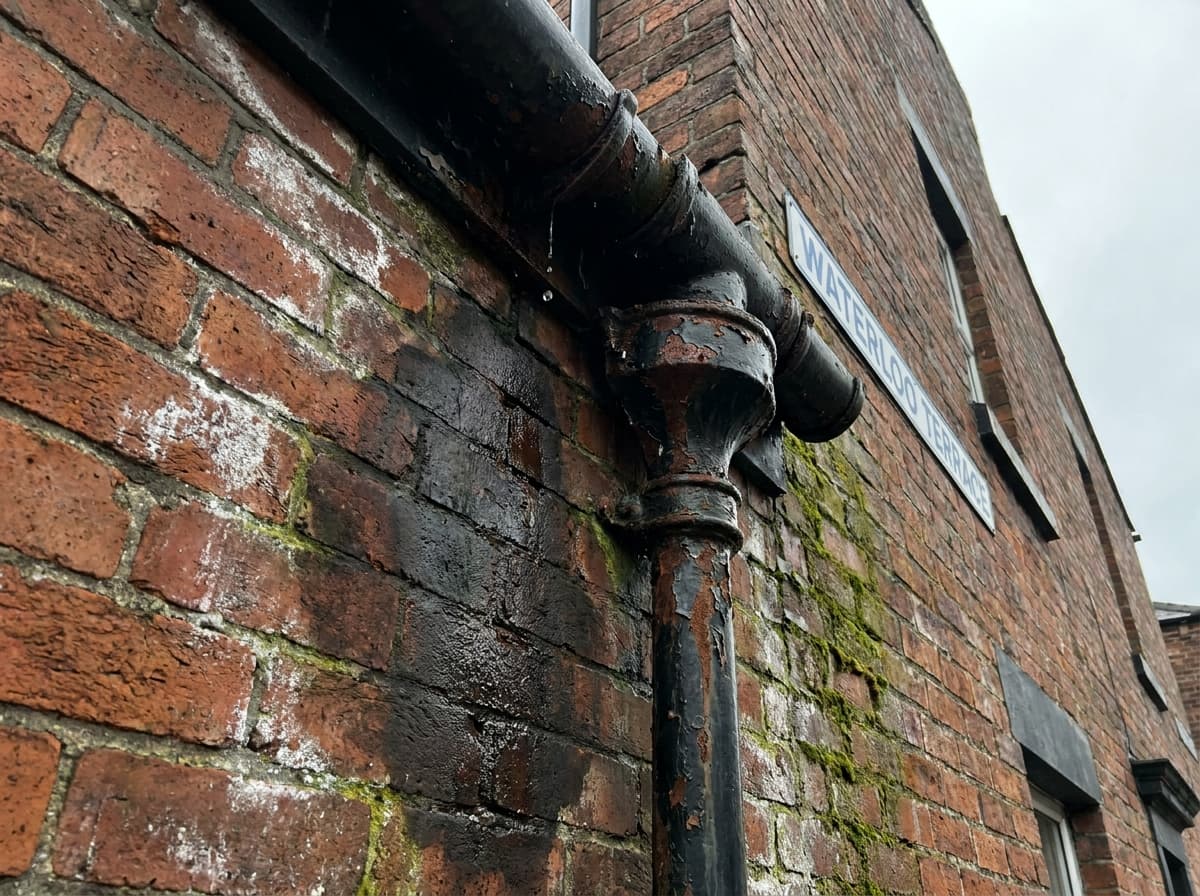
Faulty rainwater goods are probably the most common cause of all. When a gutter is blocked with leaves, cracked, sagging or wrongly aligned, it overflows and sheets water down the wall below. A split or leaking downpipe does the same in a vertical stripe.
The tell-tale sign is a damp patch, often with green staining or moss on the wall outside, directly below or beside the defect. Clearing and repairing gutters is one of the cheapest, highest-value damp fixes there is.
Roof defects
Faults at roof level let water in high up, where it may travel some distance before showing inside — often as a ceiling stain:
- Slipped, cracked or missing tiles and slates
- Failed or corroded flashing around valleys, abutments and penetrations
- Worn flat-roof coverings
- Blocked valley gutters
Roof work is height work; use a qualified roofer rather than improvising.
Render and external finishes
Solid walls are often protected by render. When render cracks or goes hollow (blown), water seeps behind it and sits against the masonry, unable to escape. Impermeable modern renders on old breathable walls are a classic cause of trapped moisture.
Important
On period and solid-wall homes, sealing the outside with cement render or masonry paint can trap water inside the wall and make penetrating damp worse. Breathable materials matter — see Historic England's guidance before re-rendering an old property.
Pointing
The mortar joints between bricks — the pointing — weather over decades. Where it has eroded, cracked or been patched with the wrong (too hard, too impermeable) mortar, driving rain is drawn through the joints. Repointing with an appropriate mortar restores the wall's defence.
Chimneys
Chimneys are exposed on all sides and full of vulnerable details — cracked flaunching, perished flashing, porous brickwork and defective cappings. They are a frequent, under-appreciated source of damp on upper walls and ceilings, sometimes well away from the stack itself.
Windows, doors and other gaps
Perished sealant around window and door frames, failed sills and gaps around service penetrations all give water a way in. These are usually quick, inexpensive fixes once identified.
Cavity bridging
In cavity walls, debris or mortar snots across the cavity, or poorly installed cavity-wall insulation, can bridge the gap and carry water to the inner leaf. This can be harder to diagnose and may need specialist inspection.
Matching cause to symptom
| Internal symptom | Likely external cause |
|---|---|
| Patch below a window outside | Gutter overflow or leaking downpipe |
| Ceiling stain | Roof defect, flashing or chimney |
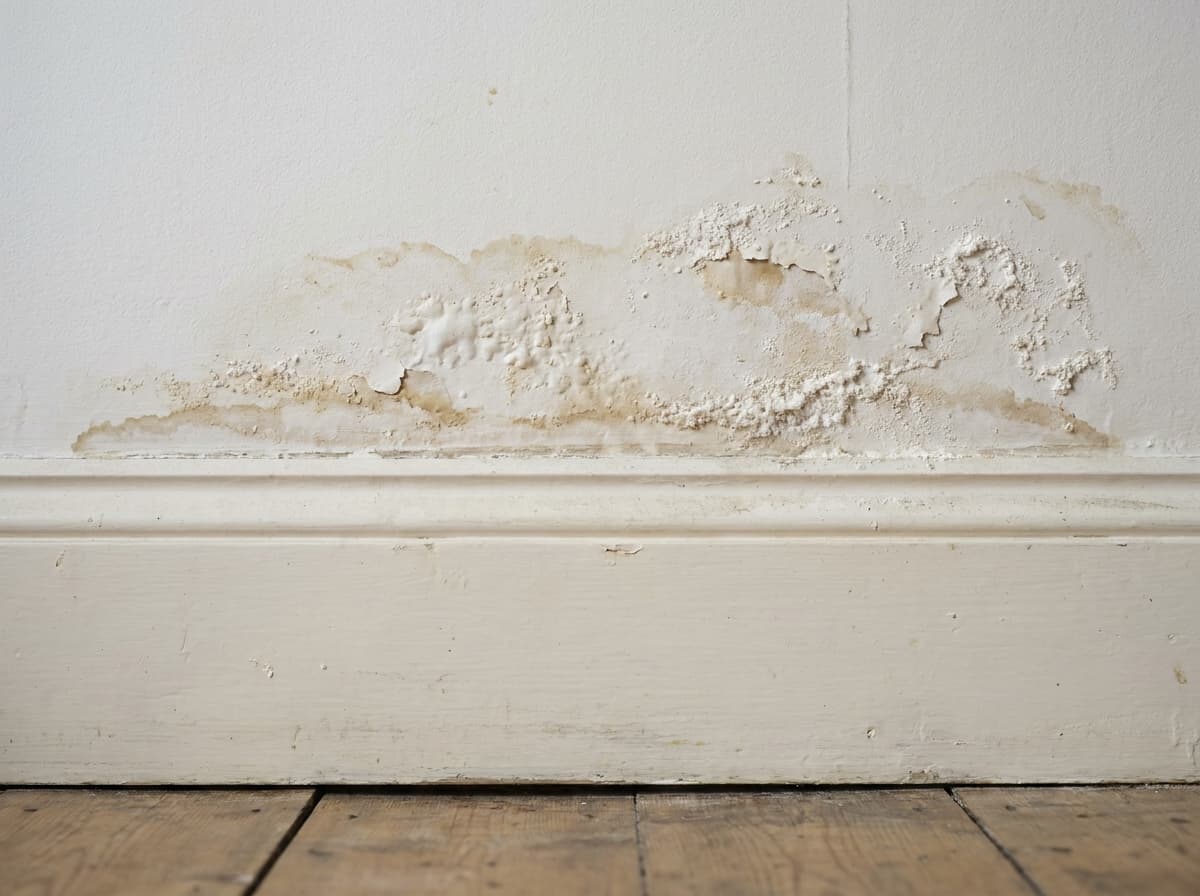
| Mid-wall patch on a rendered wall | Cracked or blown render |
| Damp stripe down a wall | Split downpipe |
Once you have matched the inside patch to an outside defect, you know what to fix. Our Damp Diagnosis Assistant can help you work through the possibilities methodically.
Frequently asked questions
Faulty rainwater goods — blocked, cracked or overflowing gutters and leaking downpipes — are the most common single cause, and often the cheapest to put right.
Sources
- Historic England: Energy Efficiency and Historic Buildings · England · accessed 27 October 2026
DampSense Editorial Team
Research & editorial
Our editorial team researches UK building-moisture topics using government guidance, public-health sources and established building-science references. We write to help homeowners and tenants make informed decisions, and we flag where professional assessment is needed.
Credentials & limitations: Research-led editorial team. We are not chartered surveyors; our guides are general information, not a professional building survey.