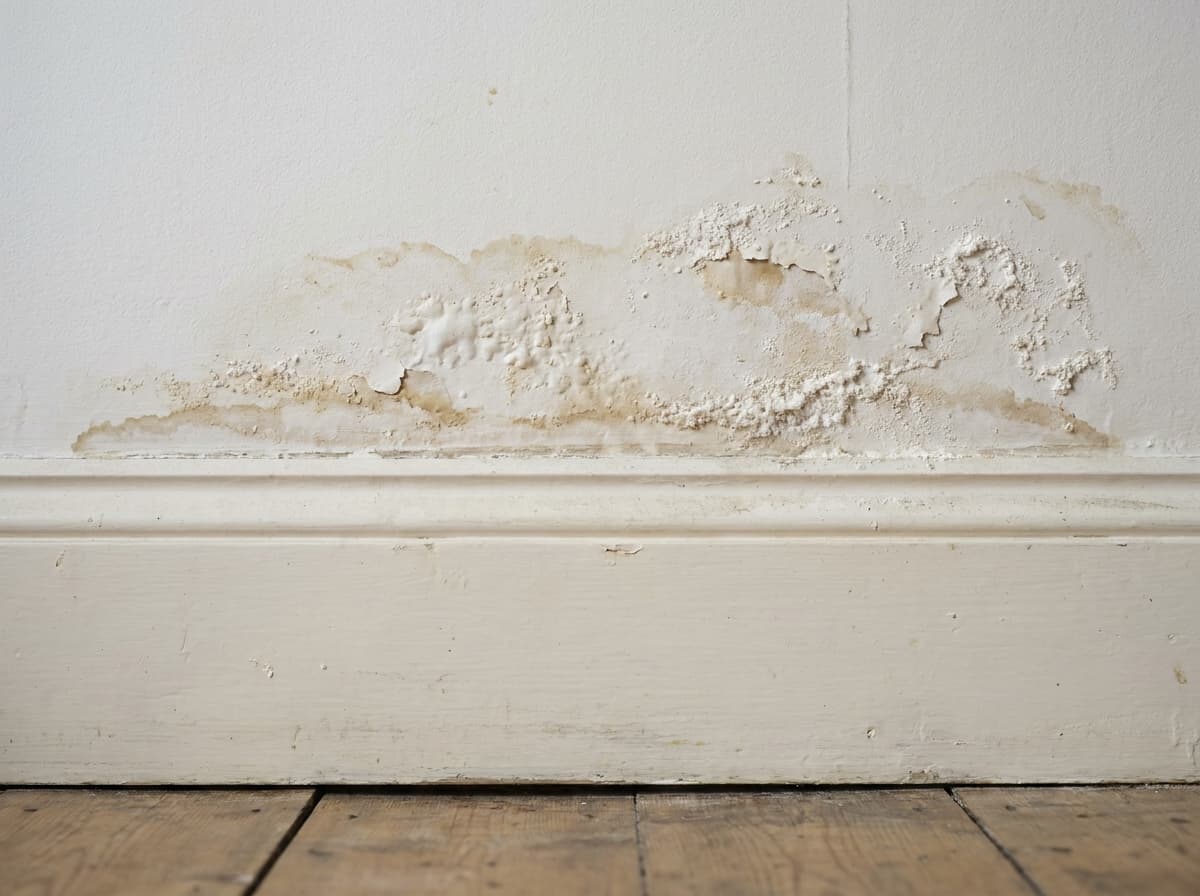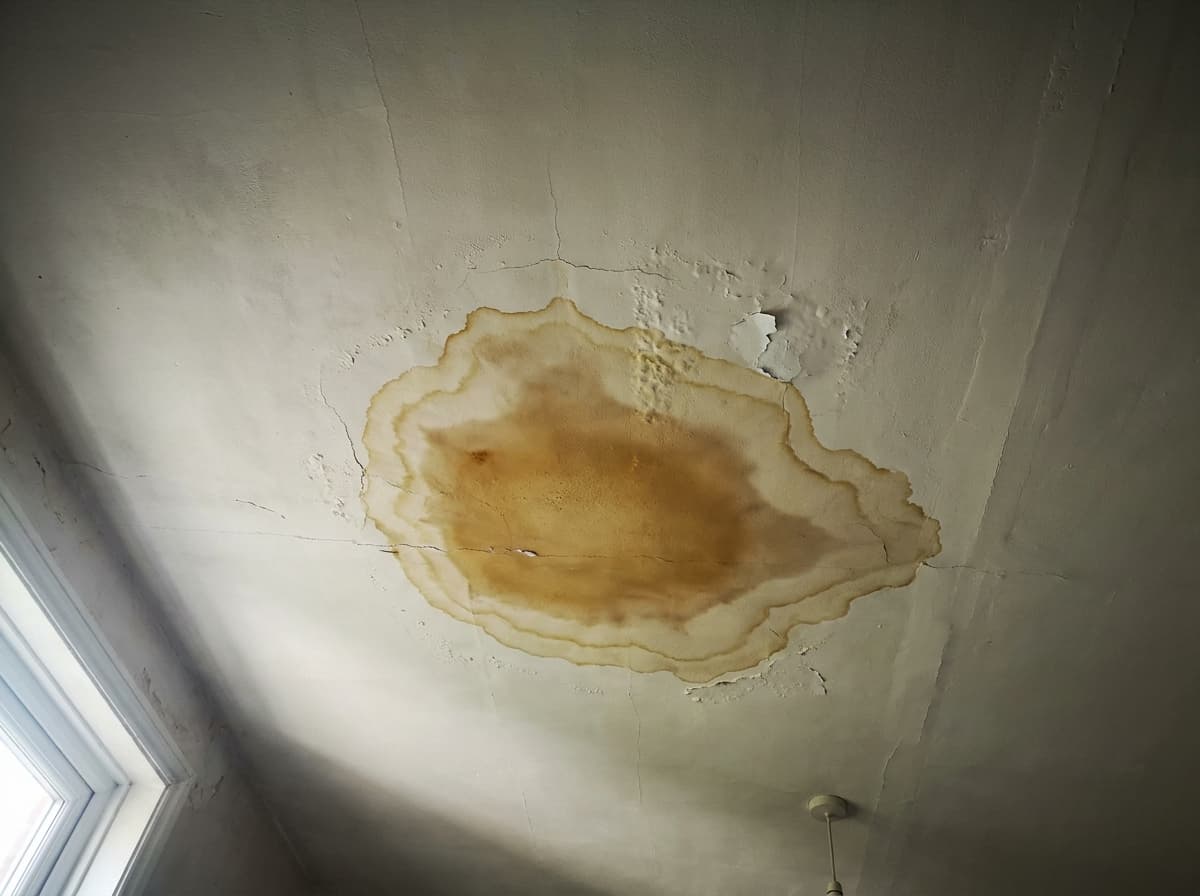
Penetrating Damp
What Is Penetrating Damp?
Penetrating damp is water that gets in from outside through a defect in the building fabric — and unlike condensation, it follows the weather.
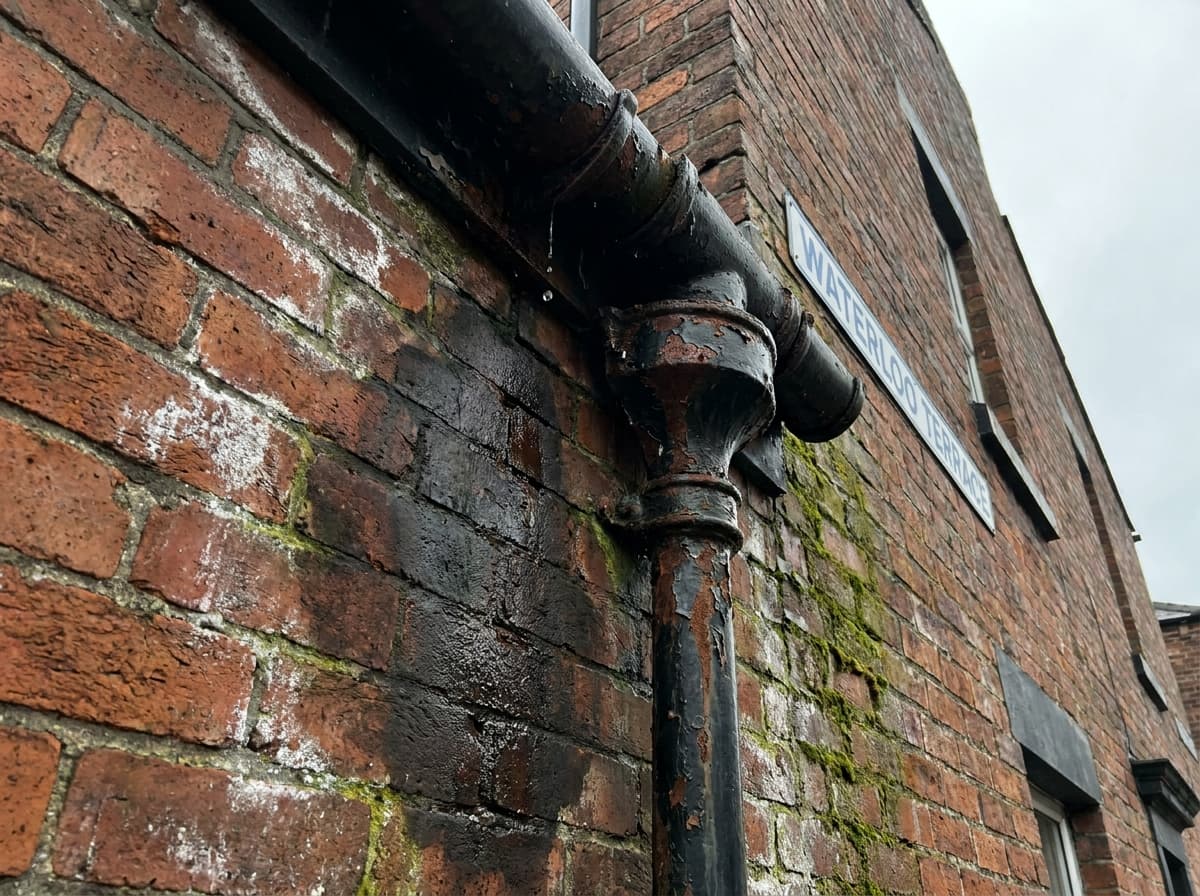
In short
Penetrating damp is water entering a building from outside through a defect — a failed gutter, cracked render, worn pointing, a roof fault or a leaking chimney. It is usually localised to one patch, can appear at any height, and typically worsens during and after rain. That weather-driven pattern is the key thing that sets it apart from both condensation and rising damp.
Key takeaways
- Penetrating damp is water getting in through an external defect, not from the ground or the indoor air.
- It is usually localised and tends to worsen during or after rain.
- It can appear at any height on a wall or ceiling — not just low down.
- The cure is to fix the external defect, not to treat the wall internally.
Penetrating damp is exactly what it sounds like: water penetrating the building fabric from outside. Rain, a leak or ground moisture finds a route through a defect — a gap, crack, blockage or worn surface — and travels inwards until it shows on an internal wall or ceiling.
How penetrating damp behaves
Three characteristics usually give it away:
- It is localised. Penetrating damp typically shows as a defined patch rather than a general spread, because it traces back to a specific defect.
- It follows the weather. The patch often appears or darkens during and after rain and fades in dry spells. This is the single most useful clue.
- It can be at any height. Unlike rising damp, which is confined to the lowest part of a wall, penetrating damp can appear mid-wall, high up, or on a ceiling — wherever the water happens to track to.
Common entry points
Penetrating damp nearly always traces back to one of a familiar set of defects:
- Blocked, cracked or overflowing gutters and downpipes
- Failed or missing roof coverings, flashing or valleys
- Cracked, hollow or missing external render
- Worn or missing mortar pointing between bricks
- Leaking chimneys, flashings and cappings
- Defective window and door seals
- Bridged or debris-filled wall cavities
Our dedicated guide to the causes of penetrating damp covers each of these in detail.
How it differs from the other types
| Feature | Penetrating damp | Rising damp | Condensation |
|---|---|---|---|
| Source | Water from outside | Groundwater below | Moist indoor air |
| Worse after rain | Yes | No | No |
| Height | Any | Low, up to ~1m | Cold surfaces |
| Spread | Localised patch | Band along base | Corners, windows |
Note
If damp worsens a day or two after heavy rain, penetrating damp is the prime suspect. If it is worse on cold winter mornings with misted windows, look at condensation instead — see condensation vs damp.
Why older and solid-wall homes are more exposed
Solid-wall properties (common pre-1920s) have no cavity to interrupt water crossing the wall, so they are more vulnerable to driving rain through worn pointing or render. Period buildings also rely on breathability, and applying the wrong impermeable sealants can trap water and make matters worse. Historic England's guidance is worth reading before treating an old wall.
Getting it diagnosed
Because the fix is external, the goal is to find the defect — often by inspecting the outside wall, roofline and rainwater goods during or just after rain. Our Damp Diagnosis Assistant helps you narrow it down, and for anything at height or on the roof, use a qualified tradesperson.
Try a related tool
Frequently asked questions
The clearest sign is a localised damp patch that worsens during or after rain and can sit at any height on a wall or ceiling. That weather-driven, localised pattern distinguishes it from rising damp and condensation.
Sources
- Historic England: Energy Efficiency and Historic Buildings · England · accessed 27 October 2026
DampSense Editorial Team
Research & editorial
Our editorial team researches UK building-moisture topics using government guidance, public-health sources and established building-science references. We write to help homeowners and tenants make informed decisions, and we flag where professional assessment is needed.
Credentials & limitations: Research-led editorial team. We are not chartered surveyors; our guides are general information, not a professional building survey.