Penetrating Damp
Treating Penetrating Damp
Treating penetrating damp is mostly about one thing — fixing the external defect that lets water in. Internal work comes afterwards, once the wall can dry.
In short
The treatment for penetrating damp is to find and fix the external defect letting water in — clearing or repairing gutters, fixing the roof, repointing, repairing render or sorting a leaking chimney. Only once the entry point is sealed and the wall has dried should you make good the internal plaster and decoration. Treating the inside without fixing the outside never works.
Key takeaways
- Fix the external defect first — it is the actual cure, not the internal plaster.
- Let the wall dry fully before replastering or redecorating.
- Breathable repairs matter on period and solid-wall homes.
- Internal 'damp-proofing' alone will not stop water coming through from outside.
There is one rule that matters more than any other with penetrating damp: fix the outside first. Everything else is secondary, and anything done inside before the defect is sealed is wasted effort.
Step one: find and fix the external defect
The cure is the repair of whatever is letting water in. Match the treatment to the cause — see the full list in what causes penetrating damp:
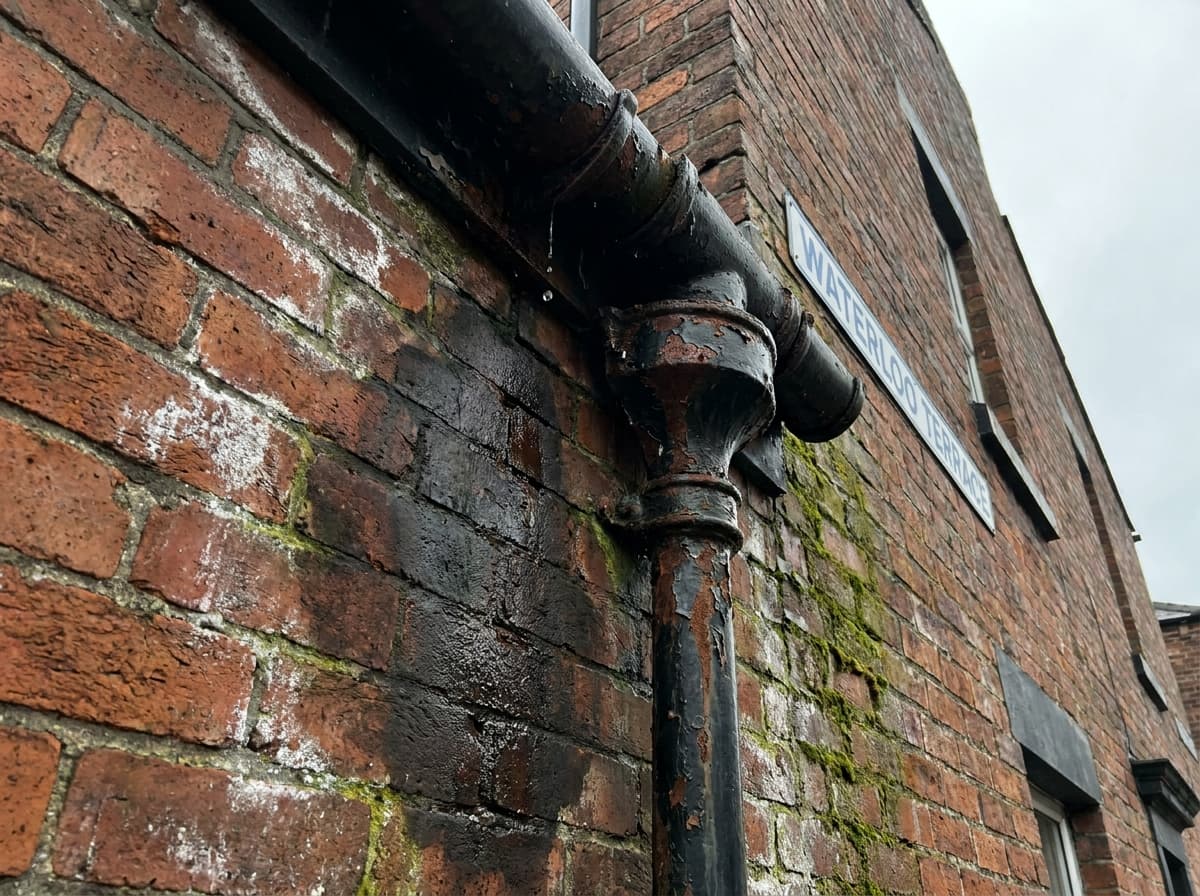
- Gutters and downpipes — clear, realign or replace. The cheapest and often most effective fix.
- Roof — replace slipped or missing tiles, renew failed flashing, repair flat-roof coverings. Use a qualified roofer.
- Render — hack off cracked or blown sections and re-render with an appropriate, ideally breathable, mix.
- Pointing — rake out and repoint failed joints with a suitable mortar.
- Chimney — repair flaunching, flashing and cappings.
- Seals — renew perished sealant around windows and doors.
Important
Do not reach for internal "damp-proofing", tanking or waterproof paint as a first move. They treat the symptom, can trap moisture, and leave the real leak active. On older breathable walls, impermeable treatments can make the damage worse.
Step two: let the wall dry
Once water is no longer getting in, the wall needs time to dry out. This can take weeks or months depending on how saturated it became and the wall's thickness. Keep the room ventilated and gently heated; rushing to replaster over a wet wall simply hides the problem.
Step three: make good inside
Only after the wall is dry should you:
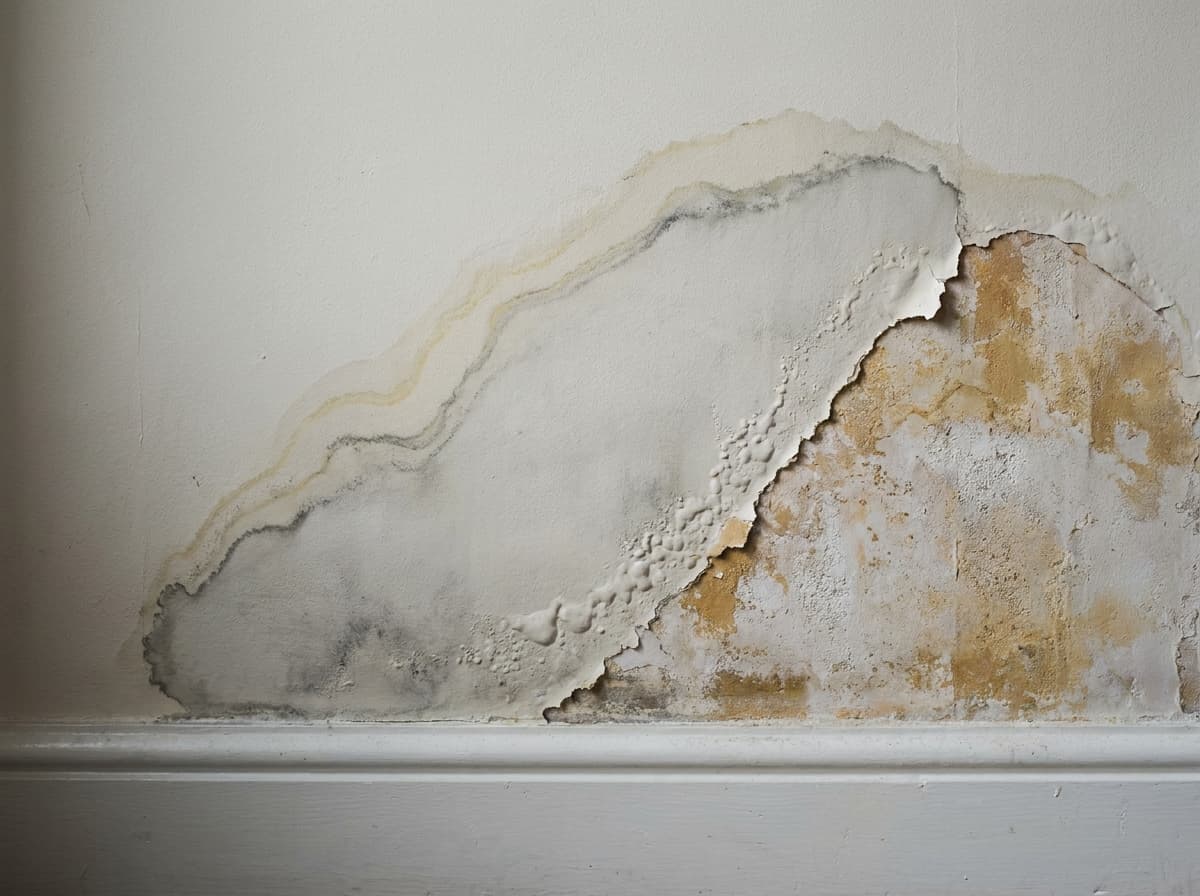
- Remove and replace any blown or salt-contaminated plaster.
- Redecorate once surfaces are confirmed dry.
- On period walls, use breathable plasters and paints so the wall can continue to release moisture.
When internal measures do have a place
Internal tanking or waterproofing is occasionally justified — for example in a basement with unavoidable ground-water pressure — but that is a specific scenario, not a cure for ordinary penetrating damp. For a typical wall, the external repair is the treatment.
Indicative costs
The ranges below are indicative for 2026 only and are not quotations; they have not been independently surveyed. Always obtain written quotes from reputable tradespeople.
| Work | Indicative range (2026) |
|---|---|
| Clearing/repairing gutters and downpipes | Low hundreds of pounds |
| Repointing (per elevation) | Several hundred to low thousands |
| Re-rendering a wall | Low to mid thousands |
| Roof/flashing repairs | Varies widely by access and extent |
| Internal replastering | A few hundred pounds per wall |
Our Damp Treatment Cost Calculator lets you explore these scenarios. Because costs hinge on access and the extent of the defect, compare a few quotes rather than taking the first.
The right order of work
- Diagnose which external defect is to blame.
- Repair that defect.
- Let the wall dry fully.
- Replaster and redecorate, breathably where appropriate.
Try a related tool
Frequently asked questions
By fixing the external defect letting water in — the gutter, roof, render, pointing or chimney — then allowing the wall to dry before making good the plaster and decoration inside. The external repair is the actual cure.
Sources
- Citizens Advice: Repairs in rented housing · UK · accessed 27 October 2026
DampSense Editorial Team
Research & editorial
Our editorial team researches UK building-moisture topics using government guidance, public-health sources and established building-science references. We write to help homeowners and tenants make informed decisions, and we flag where professional assessment is needed.
Credentials & limitations: Research-led editorial team. We are not chartered surveyors; our guides are general information, not a professional building survey.