Damp Proofing
The Damp-Proof Course (DPC)
A damp-proof course is a barrier near the base of a wall that stops groundwater rising. Here is how physical and chemical DPCs differ, and how they fail.
In short
A damp-proof course (DPC) is a horizontal, water-resistant barrier built into a wall a little above ground level to stop groundwater rising up through it by capillary action. Modern homes have a physical DPC (slate, bitumen or plastic) built in during construction. A chemical DPC is a retrofit treatment injected into an older wall. Many 'failed DPC' problems are actually a bridged DPC — a moisture path going around an intact barrier — which is cheaper to fix than injection.
Key takeaways
- A DPC is a horizontal barrier near the base of a wall that blocks rising groundwater.
- Physical DPCs (slate, bitumen, plastic) are built in; chemical DPCs are injected into older walls later.
- A bridged DPC — where moisture goes around an intact barrier — is common and often cheap to correct.
- A genuinely failed DPC is far rarer than it is diagnosed; rule out bridging and condensation first.
A damp-proof course, almost always shortened to DPC, is a water-resistant layer built horizontally into a wall just above ground level. Its single job is to interrupt the path that groundwater would otherwise take as it is drawn up through porous brick, stone and mortar by capillary action. Below the DPC the wall may be damp; above it, the DPC keeps the wall dry.
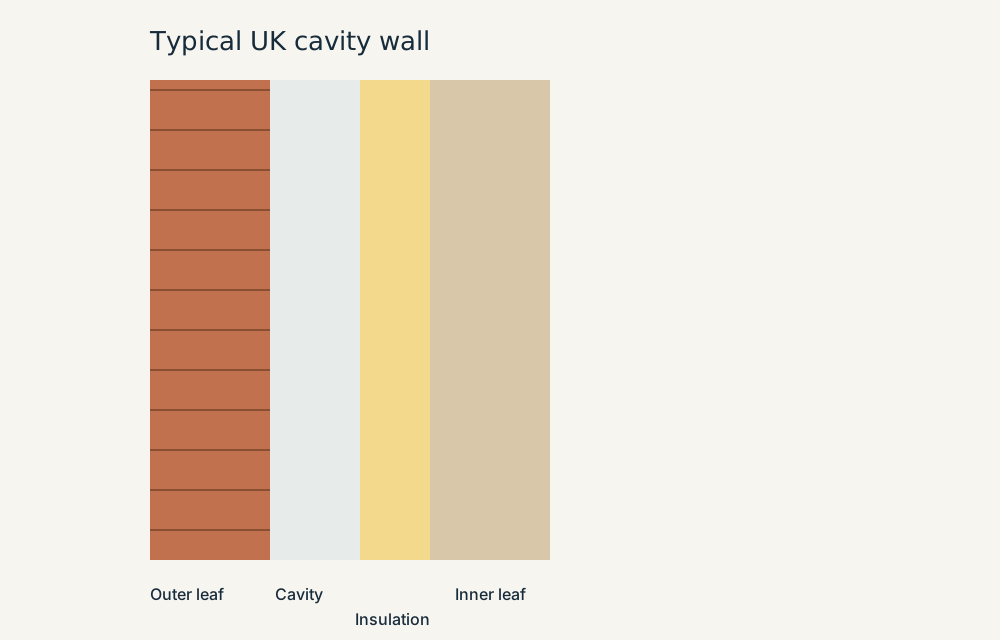
Most UK homes built since roughly the late nineteenth century have a DPC as standard. In a cavity wall it appears in both leaves. You can often see it as a thin line in the mortar a couple of courses above the outside ground level.
Physical DPCs
A physical DPC is a material barrier placed in the wall when it is built. Over the years these have included:
- Slate — two courses of slate bedded in mortar; common in Victorian and Edwardian homes and often still working today.
- Bitumen / bituminous felt — mid-twentieth-century homes; durable but can become brittle with age.
- Engineering brick — dense, low-porosity bricks used as a barrier course.
- Plastic (polythene) DPC — the modern standard, a tough plastic strip.
A physical DPC is the gold standard because it is a genuine continuous barrier. When one "fails" it is usually because it has been bridged rather than because the material itself has broken down.
Chemical DPCs
A chemical DPC is a retrofit. Where a wall has no DPC, or an old one is thought to have failed, a water-repellent fluid (typically a silicone-based cream or liquid) is injected into a line of holes drilled along the wall. The idea is that it spreads through the mortar course and forms a water-repellent zone that mimics a physical barrier.
Chemical injection has its place, but it is also the single most oversold product in the damp industry. We cover the arguments for and against in detail in damp-proof injection.
Important
Chemical DPC injection is frequently recommended for problems it cannot solve — particularly condensation and the natural moisture balance of old, breathable solid walls. It is not a general cure for damp. Be especially cautious when the firm diagnosing a failed DPC is the same firm selling the injection.
The bridged DPC: the usual real culprit
Far more often than a DPC actually failing, it has been bridged — moisture is finding a way around an intact barrier. Common causes:
- Raised external ground — a patio, path or driveway built up above the DPC line, so wet soil sits against the wall above the barrier.
- Flower beds and soil banked against the wall.
- Debris in the cavity — mortar droppings that form a damp bridge between the two leaves.
- Render or pointing taken down over the DPC line externally.
The good news is that bridging is usually cheaper to put right than any injection — often just lowering the ground level or clearing the obstruction. This is why an independent diagnosis matters so much.
How to tell the difference
| Observation | Points towards |
|---|---|
| Raised ground or a path above the DPC line | Bridged DPC |
| Damp on a cold internal surface, with mould | Condensation, not DPC failure |
| Even tide mark on an old solid wall with no DPC | Possible genuine rising damp |
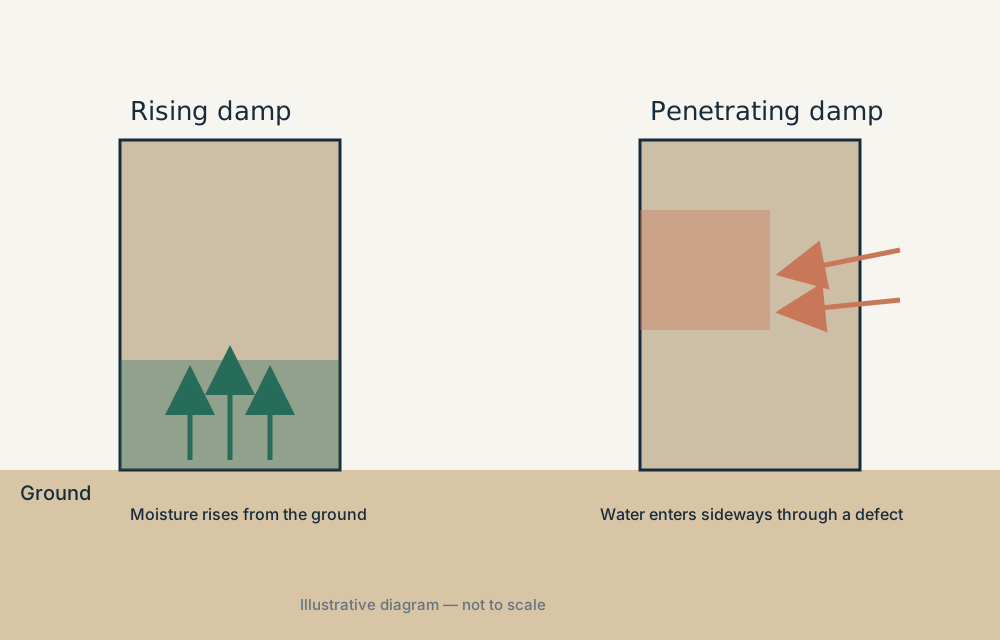
| Damp that worsens after heavy rain | Penetrating damp |
The diagram comparing rising and penetrating damp shows how these patterns differ. If in doubt, get an opinion from a surveyor who does not sell the remedy.
If the DPC genuinely needs attention
Where a DPC truly is absent or failed and rising damp is confirmed, options include chemical injection, or in some cases physical methods. Any of these should follow a proper diagnosis, ideally one that is independent of the installer, and should come with written details of exactly what is proposed and why.
Frequently asked questions
You often cannot tell from the inside alone, and a 'failed DPC' is diagnosed far more often than it genuinely occurs. Before accepting it, check outside for a raised path, patio or flower bed bridging the DPC, and rule out condensation. An independent surveyor who does not sell treatment is the safest check.
Sources
- Historic England: Energy Efficiency and Historic Buildings · England · accessed 27 October 2026
DampSense Editorial Team
Research & editorial
Our editorial team researches UK building-moisture topics using government guidance, public-health sources and established building-science references. We write to help homeowners and tenants make informed decisions, and we flag where professional assessment is needed.
Credentials & limitations: Research-led editorial team. We are not chartered surveyors; our guides are general information, not a professional building survey.