Damp Proofing
Damp-Proof Injection: Does It Work?
Chemical DPC injection is widely sold but often inappropriate. Here is a balanced view of when it genuinely helps and when it is the wrong fix.
In short
Damp-proof injection is a retrofit chemical treatment: a water-repellent cream or fluid injected into a line of holes drilled along the base of a wall, intended to form a barrier against rising damp. It can be appropriate where genuine rising damp is confirmed in a wall with a missing or failed DPC. However, it is heavily oversold — it does nothing for condensation (the most common cause of household damp) and is often inappropriate for old, breathable solid walls, where it can do harm.
Key takeaways
- Injection is a retrofit chemical DPC, meant only for confirmed rising damp.
- It does nothing for condensation, penetrating damp or a bridged DPC — the far more common causes.
- It is often inappropriate for old, breathable solid and period walls, where it can trap moisture.
- Always get an independent diagnosis before agreeing to injection; the seller is not a neutral assessor.
- The injection itself is only part of the job — replastering is usually the larger cost and disruption.
Damp-proof injection is the retrofit answer to a missing or failed damp-proof course. A specialist drills a line of holes along the base of a wall and injects a water-repellent chemical — nowadays usually a silicone-based cream — which is intended to spread through the mortar course and create a zone that resists rising moisture. It is one of the most heavily marketed treatments in the UK damp industry, which is precisely why it deserves a sceptical, balanced look.
This guide is not here to sell you injection or to tell you it never works. It is here to help you decide whether it is the right answer for your problem — because very often it is not.
When injection can be appropriate
Injection has a legitimate, narrow use case. It can be a reasonable option when all of the following are true:
- The damp is genuinely rising damp — confirmed, not just asserted.
- The wall has a missing or failed physical DPC that cannot practically be repaired or replaced.
- Cheaper causes — a bridged DPC, condensation, a leak, penetrating damp — have been properly ruled out first.
- The wall is a conventional cavity or solid masonry wall, not a soft, breathable period wall that relies on moisture evaporating.
Where those conditions hold, a competent injected DPC combined with appropriate replastering can be a sensible, durable repair.
When injection is oversold
The problem is that injection is recommended far beyond that narrow case. The industry has strong commercial incentives: the firm that diagnoses the problem is usually the firm that sells and installs the cure, and handheld "damp meters" are easily made to read high.
Important
A damp meter reading is not a diagnosis of rising damp. These meters respond to salts and surface moisture and will read high on a perfectly ordinary condensation problem. Never accept an injection quote on the strength of a meter reading alone.
Injection is the wrong fix for:
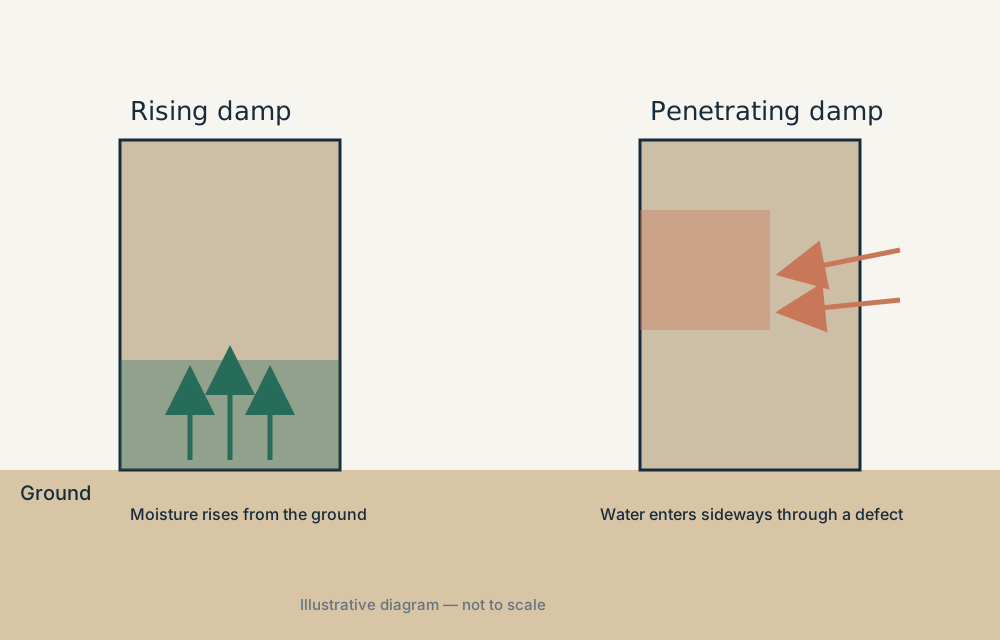
- Condensation — by far the most common household damp. Injection does nothing; the answer is ventilation and heating. See what is damp.
- Penetrating damp — water coming through the wall from outside. Fix the external defect instead. See what is penetrating damp.
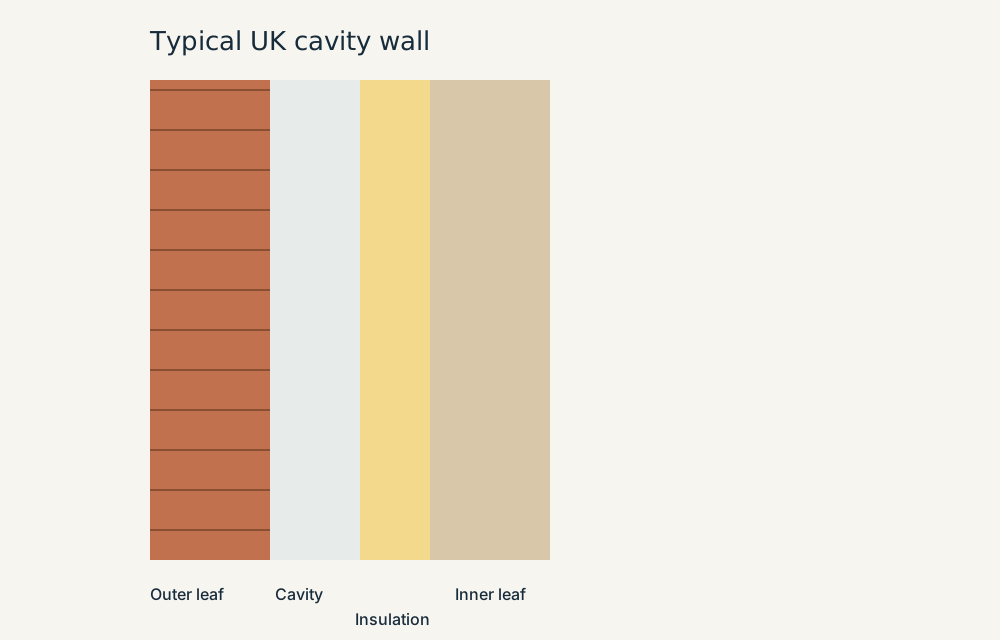
- A bridged DPC — remove the bridge (lower the ground, clear the cavity) rather than inject.
The special case of period and solid walls
Older solid-walled and period buildings are designed to let moisture move in and out — they "breathe". Historic England's guidance is clear that interventions which trap moisture, or which replace breathable finishes with cement and waterproof treatments, can do more harm than good. Injecting a chemical barrier and then sealing a period wall with dense cement render and gypsum plaster can push moisture elsewhere and cause decay.
Note
For a pre-1919 or solid-walled home, seek advice from someone experienced with traditional construction before considering injection. The right answer is frequently improved external maintenance and breathable repairs, not a chemical DPC.
What the job actually involves (and costs)
People often picture "an injection". In practice the injection is the quick part; the replastering is the bulk of the cost and disruption:
- Hacking off damp and salt-contaminated plaster, usually to about a metre.
- Drilling and injecting the chemical DPC.
- Allowing drying time.
- Replastering with a salt-retardant or renovating system.
- Redecorating once fully dry.
Because the replastering dominates, the overall cost is well above the price of the chemicals alone. We break down figures in rising damp treatment cost, and you can sketch a rough range with the Damp Treatment Cost Calculator. Remember those figures are indicative, not quotations.
Before you say yes
- Get an independent diagnosis from someone who does not sell the treatment.
- Insist on a written explanation of why rising damp is the conclusion and why alternatives were excluded.
- Get multiple written quotes and compare the scope, not just the headline price.
- Check what guarantee is offered, who stands behind it, and whether it would survive the installer going out of business.
Try a related tool
Frequently asked questions
For genuine, correctly diagnosed rising damp in a suitable wall, a competent injected DPC with proper replastering can work. But injection does nothing for condensation, penetrating damp or a bridged DPC — which cause most household damp — and can be inappropriate for breathable period walls.
Sources
- Historic England: Energy Efficiency and Historic Buildings · England · accessed 27 October 2026
DampSense Editorial Team
Research & editorial
Our editorial team researches UK building-moisture topics using government guidance, public-health sources and established building-science references. We write to help homeowners and tenants make informed decisions, and we flag where professional assessment is needed.
Credentials & limitations: Research-led editorial team. We are not chartered surveyors; our guides are general information, not a professional building survey.