Mould
How to Remove Mould Safely
Removing mould is straightforward if you work safely. But cleaning is only half the job — the mould will return unless you also fix the moisture feeding it.
In short
To remove mould safely: ventilate the room, wear protective gloves and ideally a mask and eye protection, avoid brushing or disturbing dry mould, and wipe the affected surface with a suitable mould cleaner, then dry it thoroughly. Crucially, you must also fix the moisture source — usually condensation — or the mould will simply grow back. For large areas (around a square metre or more) or recurring mould, get professional help.
Key takeaways
- Work safely: ventilate, wear gloves (and ideally a mask and eye protection), and do not brush dry mould.
- Cleaning only treats the symptom — you must fix the moisture source to stop regrowth.
- Do not just paint over mould; the surface must be clean, dry and the cause resolved first.
- For large areas (around 1 square metre or more) or repeat mould, consider a specialist.
Removing visible mould is not difficult, but two things make the difference between a quick win and a job you keep repeating: doing it safely, and dealing with the moisture source once the surface is clean. Skip the second part and the mould will be back.
Before you start: work safely
Disturbing mould can release spores into the air, so take sensible precautions:
- Ventilate the room — open a window and keep the door to the rest of the home closed if you can, so spores are not spread around.
- Wear protective gloves, and ideally eye protection and a well-fitting face mask suitable for fine particles.
- Do not brush, scrub dry or hoover dry mould. Dry disturbance throws spores into the air. Dampen the surface gently first.
- Keep vulnerable people out of the room while you work and until it has aired — this includes young children, older people, anyone with asthma or allergies, and anyone with a weakened immune system (see our health risks article).
Important
Do not try to identify the mould species or judge how harmful it is from its appearance — that is not possible from a photo or by colour. Treat all mould with the same care, and if you feel unwell during or after cleaning, stop and get fresh air.
How to remove mould — step by step
- Prepare the room. Open a window, put on your gloves and mask, and move or cover anything nearby you want to protect.
- Dampen the mould lightly. A light misting stops spores from flying up when you wipe. Avoid soaking the surface.
- Wipe the surface with a cloth and a suitable mould cleaner, following the product instructions. Work gently from the edges inwards and wipe, rather than scrub aggressively.
- Dispose of cloths carefully. Use disposable cloths where possible and bag them up; if using a reusable cloth, wash it separately and hot.
- Dry the surface thoroughly. Mould needs moisture — leaving the area properly dry removes what it depends on. Keep the room ventilated afterwards.
- Clean soft furnishings appropriately. Fabrics and soft items that have become mouldy may need specialist cleaning or, in some cases, replacing.
A note on cleaning products
Various household mould removers and fungicidal washes are sold for this job. Follow the label, never mix cleaning products together (some combinations produce dangerous fumes), and keep the room ventilated throughout.
The step most people skip: fix the moisture
This is the part that actually stops mould coming back. Cleaning removes what you can see; it does nothing about why it grew.
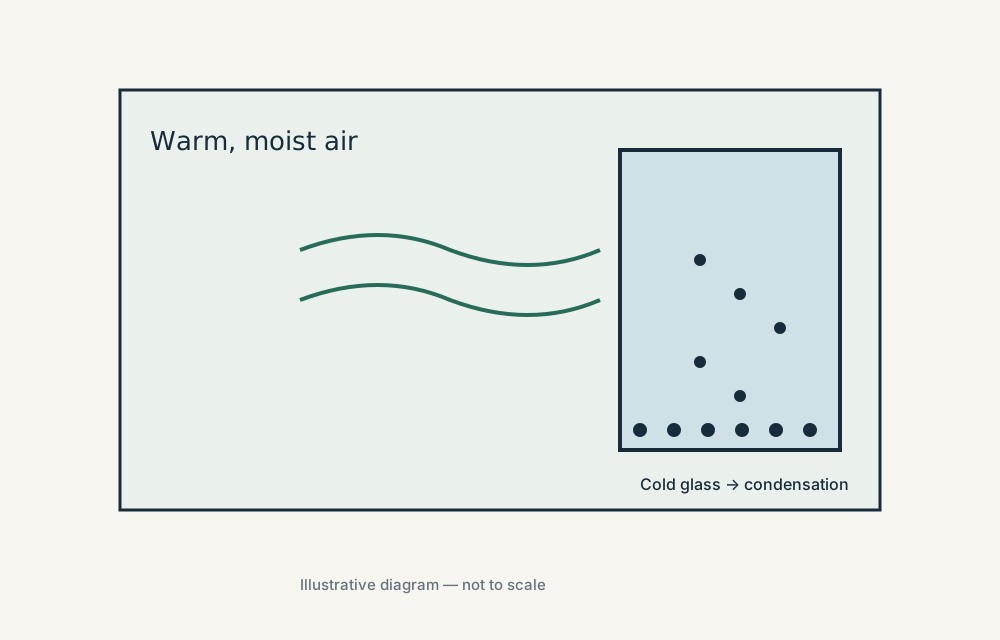
In most UK homes the cause is condensation — too much moisture indoors, cold surfaces and not enough ventilation. Tackle it with our guide on how to stop condensation, and use the Mould Risk Checklist to find the weak points in your home.
If the mould is not in a cold, poorly ventilated spot — or a damp patch is worse after rain — the cause may be a leak or penetrating damp instead, which needs a different fix.
Note
Do not simply paint over mould. Even mould-resistant paint applied to a damp surface will not solve the problem; the mould usually returns and the paint can flake. Paint only once the surface is clean, dry and the moisture source is resolved.
When to call a professional
As general guidance rather than a strict rule, a small patch is usually a safe DIY job. Consider calling in a specialist if:
- The affected area is large — commonly cited as around a square metre or more.
- The mould keeps returning despite cleaning and your attempts to fix the moisture.
- It is linked to a leak, flooding or structural problem you cannot resolve yourself.
- Someone in the home is particularly vulnerable and you want the job done thoroughly.
Once the surface is clean and dry, turn your attention to prevention — see how to prevent mould.
Try a related tool
Frequently asked questions
Ventilate the room, wear protective gloves (and ideally a mask and eye protection), dampen the mould lightly so you do not spread dry spores, and wipe it away with a suitable cleaner before drying the surface thoroughly. Never brush or hoover dry mould, and keep vulnerable people out of the room while you work.
Sources
- NHS: Can damp and mould affect my health? · UK · accessed 27 October 2026
- GOV.UK (UKHSA): Understanding and addressing the health risks of damp and mould in the home · England · accessed 27 October 2026
DampSense Editorial Team
Research & editorial
Our editorial team researches UK building-moisture topics using government guidance, public-health sources and established building-science references. We write to help homeowners and tenants make informed decisions, and we flag where professional assessment is needed.
Credentials & limitations: Research-led editorial team. We are not chartered surveyors; our guides are general information, not a professional building survey.