Mould
Black Mould in the Home
Black mould is a sign that a surface has been damp for too long. Clearing it matters, but the lasting fix is always to find and stop the moisture feeding it.
In short
Black mould is the dark, patchy fungal growth that appears on walls, ceilings, sealant and window reveals where a surface has stayed damp. In UK homes it is most often fed by condensation. You cannot judge how harmful a particular patch is from its colour, so treat any mould as something to remove carefully and — crucially — fix the moisture source behind it, because cleaning alone will not stop it returning.
Key takeaways
- Black mould is a symptom of a persistent moisture problem, most often condensation in UK homes.
- You cannot identify a mould species or its toxicity from a photo or its colour — do not try.
- Cleaning the surface without fixing the moisture source will only lead to regrowth.
- Damp and mould can affect health, and some people are more vulnerable than others (NHS/UKHSA).
- Painting over mould is not a fix — the moisture must be addressed first.
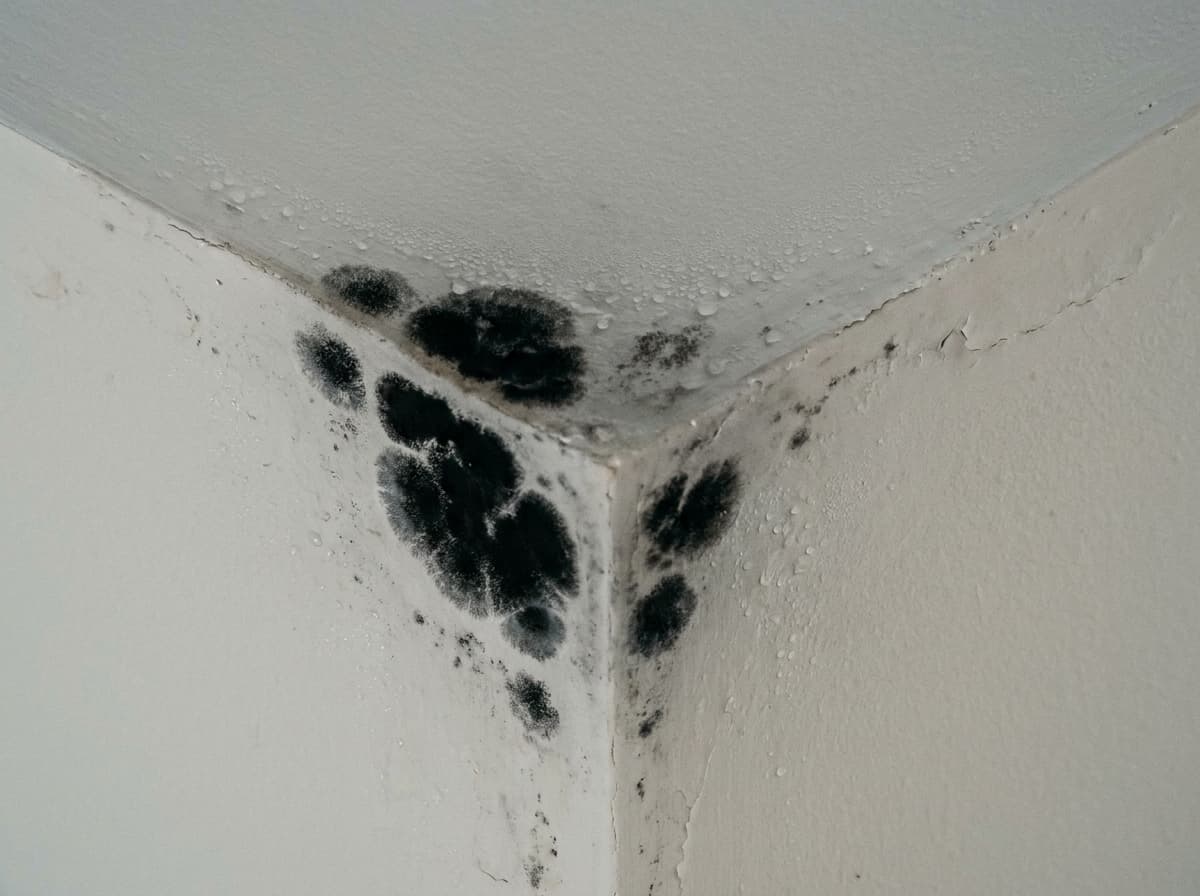
"Black mould" is an everyday label for the dark, often speckled or patchy fungal growth people find on cold walls, ceiling corners, around window reveals and on bathroom sealant. It is not one single organism, and the name describes what it looks like rather than what it is.
The single most useful thing to understand is this: mould is a symptom. It grows because a surface has been damp for long enough — not because of bad luck or poor cleaning. Deal with the mould, yes, but the lasting answer is to find and stop the moisture feeding it.
Why black mould grows in UK homes
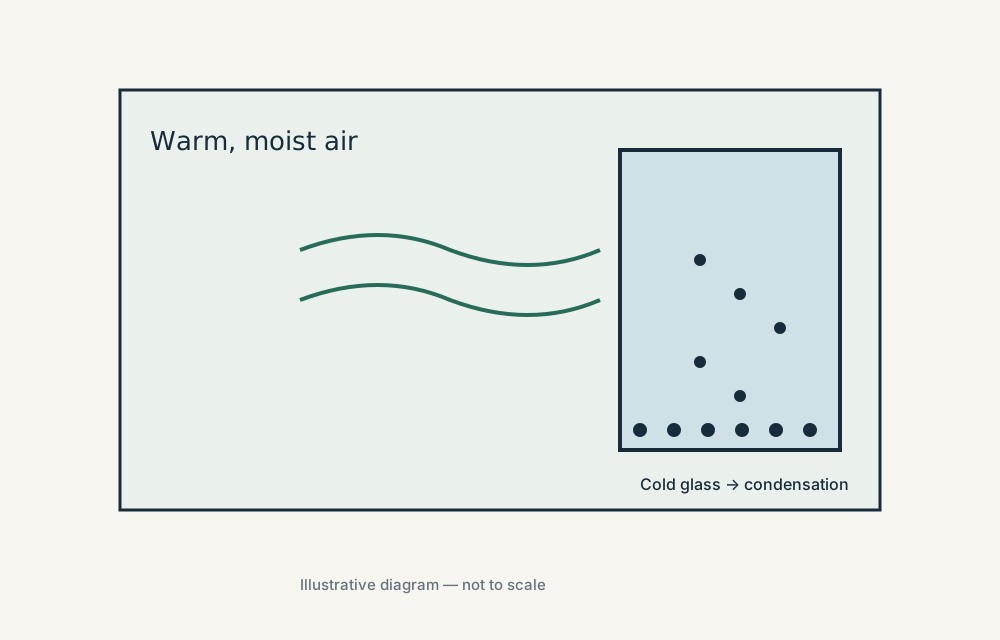
Mould needs moisture, something to grow on (ordinary dust, paint and plaster are plenty) and mild warmth. UK homes supply all three, especially in the colder months. The usual culprit is condensation: warm, moisture-laden indoor air meeting a cold surface and leaving water behind.
That is why black mould so often turns up in predictable places:
- Cold external-wall corners, especially behind furniture pushed against the wall
- Window reveals and the sealant around frames
- Bathrooms and kitchens, where moisture is produced in bulk
- North-facing rooms and spaces that are heated little and ventilated less
If the growth is confined to these cold, poorly ventilated spots and is worse in winter, condensation is the likely driver. Our guide to what causes condensation explains the mechanism, and the Mould Risk Checklist can help you spot the conditions in your own home.
Occasionally mould is fed by a leak or penetrating damp instead — a persistent damp patch that is worse after rain, or growth in an odd spot with no obvious cold surface. If the pattern does not fit condensation, use the Damp Diagnosis Assistant to think it through.
Can you tell if black mould is "toxic" from a photo?
No — and this matters.
Important
You cannot identify a mould species, or how harmful it is, from its colour or from a photograph. Many different moulds appear dark, and the terms "black mould" and "toxic mould" are not precise descriptions of any one organism. Treat all indoor mould as something to remove carefully and to take seriously, rather than trying to self-diagnose the type or its toxicity.
The sensible approach is the same whatever the mould looks like: remove it safely, protect yourself while you do, and fix the moisture so it does not come back.
What about health?
Living in a damp and mouldy home can affect health. According to the NHS, damp and mould can cause or worsen respiratory problems such as coughing and wheezing, and can affect the immune system. UK public-health guidance from the UK Health Security Agency (UKHSA) sets out the same broad message: exposure to damp and mould is associated with health effects, particularly for the airways.
Some people may be more affected than others. NHS and UKHSA guidance highlights that babies and children, older people, those with existing respiratory conditions such as asthma or allergies, and people with a weakened immune system can be more vulnerable. If you or someone in your home is in one of those groups, it is worth being especially prompt about dealing with damp and mould and, where there are health concerns, speaking to a GP.
We cover this in more detail — conservatively and with sources — in our dedicated article on the health risks of damp and mould.
What to do about it
- Confirm and fix the moisture source. This is the part that actually solves the problem. For condensation, that means reducing the moisture you produce indoors, improving ventilation and keeping surfaces warmer. Start with how to stop condensation.
- Remove the mould safely. Ventilate the room, wear protective gloves (and ideally eye protection and a suitable mask), and avoid brushing or disturbing dry mould, which can release spores. See our step-by-step guide on how to remove mould.
- Do not simply paint over it. Covering mould — even with "anti-mould" paint — on a surface that is still damp will not stop it. The paint may flake and the mould typically returns. Paint only after the surface is clean, dry and the moisture source is resolved.
Note
As general guidance, a small patch is usually something a competent householder can tackle. If the affected area is large — commonly cited as roughly a square metre or more — or it keeps returning despite your efforts, it is sensible to get professional help to find the underlying cause. Treat that threshold as a rule of thumb, not a hard line.
The bottom line
Black mould is a visible warning that a surface is staying too damp. Clean it carefully, but put most of your effort into the moisture: ventilation, heating and reducing indoor moisture. Fix that, and the mould loses the conditions it needs to grow.
Try a related tool
Frequently asked questions
You cannot judge how harmful a patch of mould is from its colour or a photo, so it is best to treat any indoor mould as something to remove safely and take seriously. The NHS notes that damp and mould can affect health, with some people more vulnerable than others. The priority is to remove it carefully and fix the moisture feeding it.
Sources
- NHS: Can damp and mould affect my health? · UK · accessed 27 October 2026
- GOV.UK (UKHSA): Understanding and addressing the health risks of damp and mould in the home · England · accessed 27 October 2026
DampSense Editorial Team
Research & editorial
Our editorial team researches UK building-moisture topics using government guidance, public-health sources and established building-science references. We write to help homeowners and tenants make informed decisions, and we flag where professional assessment is needed.
Credentials & limitations: Research-led editorial team. We are not chartered surveyors; our guides are general information, not a professional building survey.