Penetrating Damp
The Signs of Penetrating Damp
The signs of penetrating damp — localised patches, weather-driven staining and damp that can strike at any height — and how to separate it from other causes.
In short
Penetrating damp usually shows as a well-defined damp patch that darkens during or after rain and dries out in settled weather. Look for water staining, blistering or crumbling plaster, peeling paint, and damp that can appear at any height — on a ceiling, mid-wall or around a window. The weather-driven, localised pattern is what marks it out from rising damp and condensation.
Key takeaways
- A localised patch that reacts to rainfall is the hallmark of penetrating damp.
- It can appear anywhere — ceilings, mid-wall, around windows — not just low down.
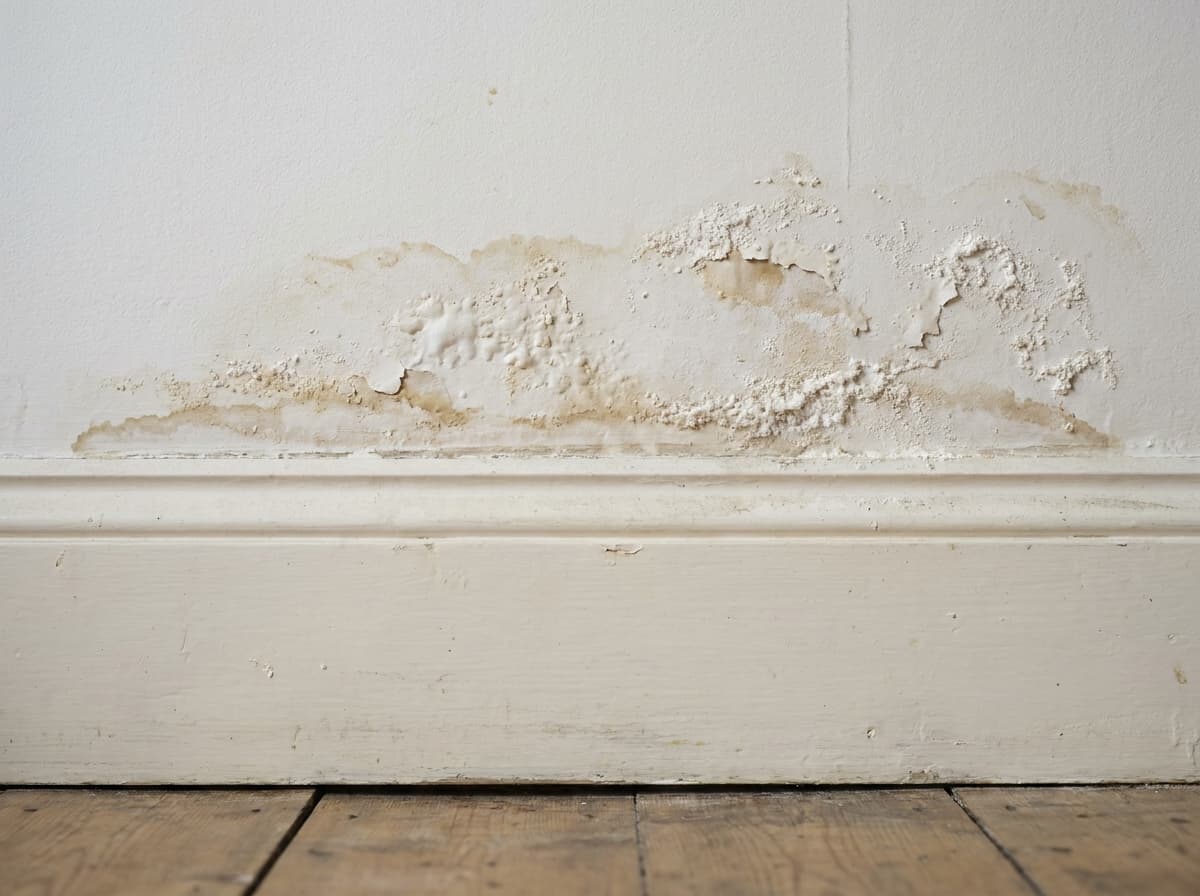
- Expect staining, blistering plaster and peeling paint at the point of entry.
- Matching an internal patch to an external defect confirms the diagnosis.
Penetrating damp tends to announce itself clearly if you know what to watch for — and especially if you check during wet weather.
The tell-tale signs
A localised, well-defined patch
Unlike the broad, low band of rising damp or the scattered corner mould of condensation, penetrating damp usually forms a distinct patch that traces back to one entry point.
Damp that reacts to rain
The decisive clue is timing. A patch that appears or darkens during and after rain, then fades in dry spells, is almost certainly penetrating damp. Checking the wall both wet and dry is the most useful single test you can do.
Staining, blistering and peeling
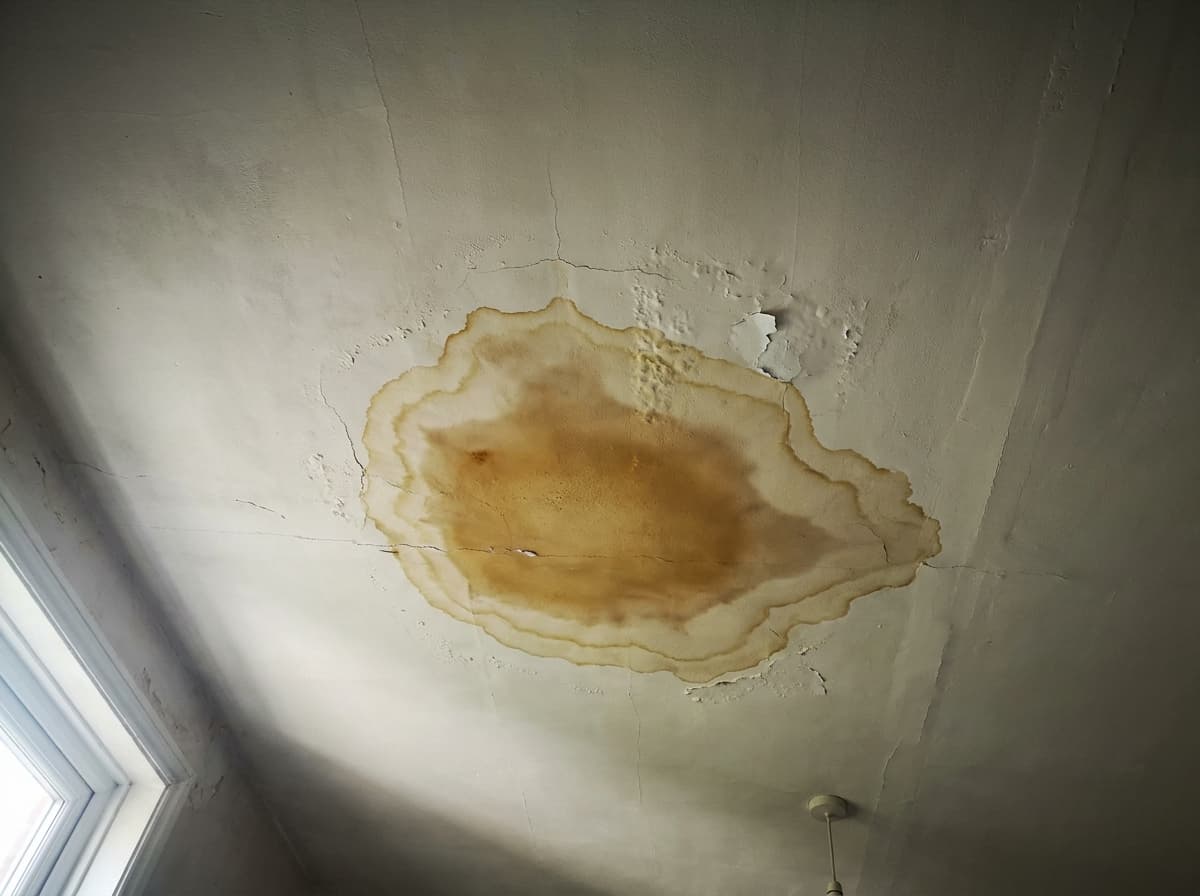
At the point where water arrives you will often see brown water staining, blistering or crumbling plaster, bubbling or peeling paint, and damaged decoration. On a ceiling it may look like a tide-marked ring.
Damp at any height
Because water tracks from wherever the defect is, penetrating damp can show high on a wall, mid-wall, around a window or on a ceiling — anywhere rising damp cannot reach.
Tip
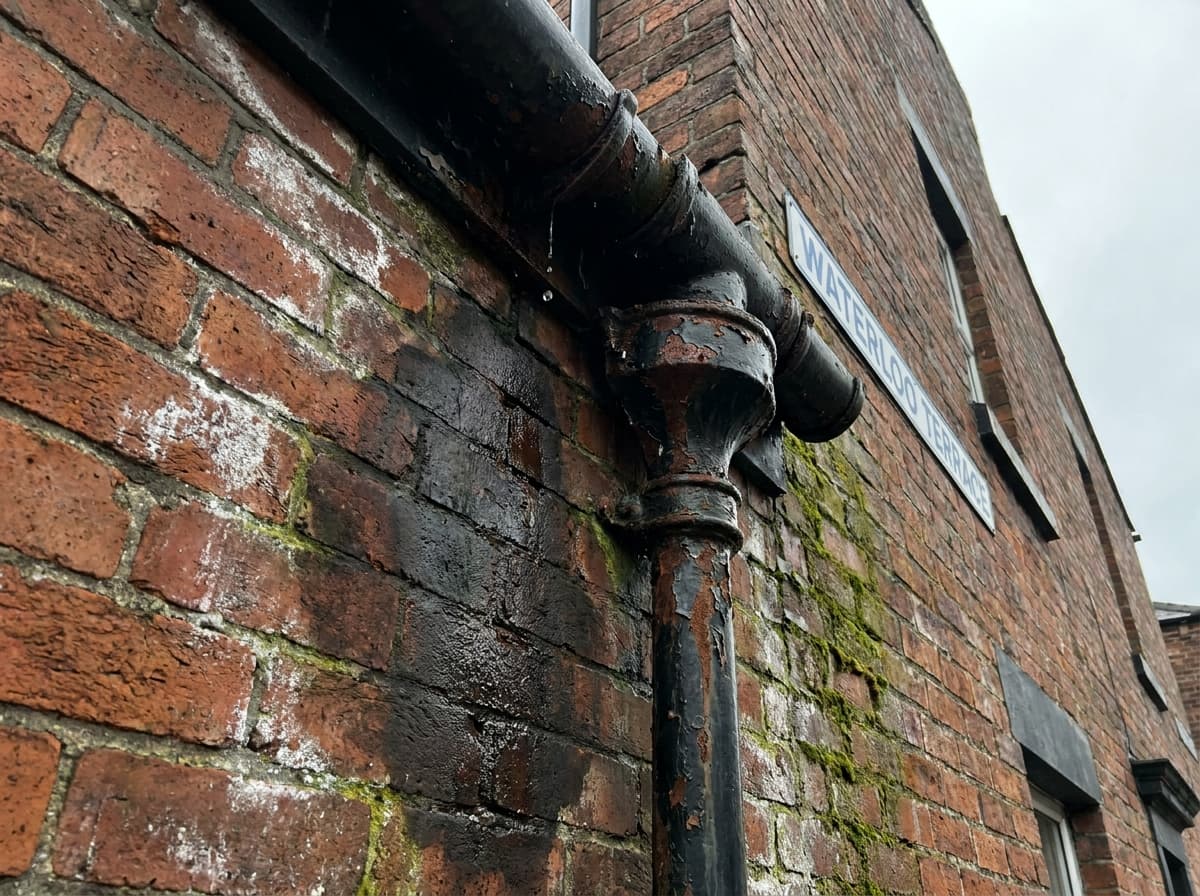
Inspect the outside while it is raining. Watching where water runs, pools or overflows — a blocked gutter, a cracked render panel, a dripping downpipe joint — often reveals the defect directly above or outside the internal patch.
Telling it apart from other damp
| What you notice | Points to |
|---|---|
| Patch worse after rain | Penetrating damp |
| Low band with salt tide mark | Rising damp |
| Black mould in cold corners | Condensation |
| Misted windows, worse in winter | Condensation |
| Ceiling stain under a flat roof or chimney | Penetrating damp |
Compare the full picture in rising damp vs condensation if you are unsure which family of problem you have.
Confirming the source
- Mark the edges of the patch and note whether it grows after rain.
- Look directly outside and above the patch for a defect.
- Check gutters, downpipes, pointing, render and flashing.
- For roof-level or chimney faults, bring in a qualified tradesperson.
Our Damp Diagnosis Assistant can help you link the symptoms to a likely external cause before you commit to any repair.
Frequently asked questions
A defined damp patch — often with brown staining, blistering plaster and peeling paint — that darkens after rain and can appear at any height, including on ceilings around chimneys or flat roofs.
Sources
- GOV.UK: Understanding and addressing the health risks of damp and mould in the home · England · accessed 27 October 2026
DampSense Editorial Team
Research & editorial
Our editorial team researches UK building-moisture topics using government guidance, public-health sources and established building-science references. We write to help homeowners and tenants make informed decisions, and we flag where professional assessment is needed.
Credentials & limitations: Research-led editorial team. We are not chartered surveyors; our guides are general information, not a professional building survey.