Mould
Mould in the Bathroom
Bathrooms concentrate moisture in a small space, so they are prime territory for mould. Better ventilation and a few habits make a big difference.
In short
Bathrooms get mouldy because showering and bathing release a lot of moisture into a small, often cold and under-ventilated room. To stop it: run an extractor fan during and after use, open a window, keep the door closed so moisture does not spread, wipe down wet surfaces, and clean existing mould safely. If the fan is weak or missing, improving ventilation is usually the most effective single change.
Key takeaways
- Bathrooms generate lots of moisture in a small space, making them prime mould territory.
- Ventilation is usually the biggest lever: a working extractor fan plus an open window.
- Keep the door shut during use so moisture does not travel to colder rooms.
- Clean mould safely and address the moisture — do not just repaint or re-seal over it.
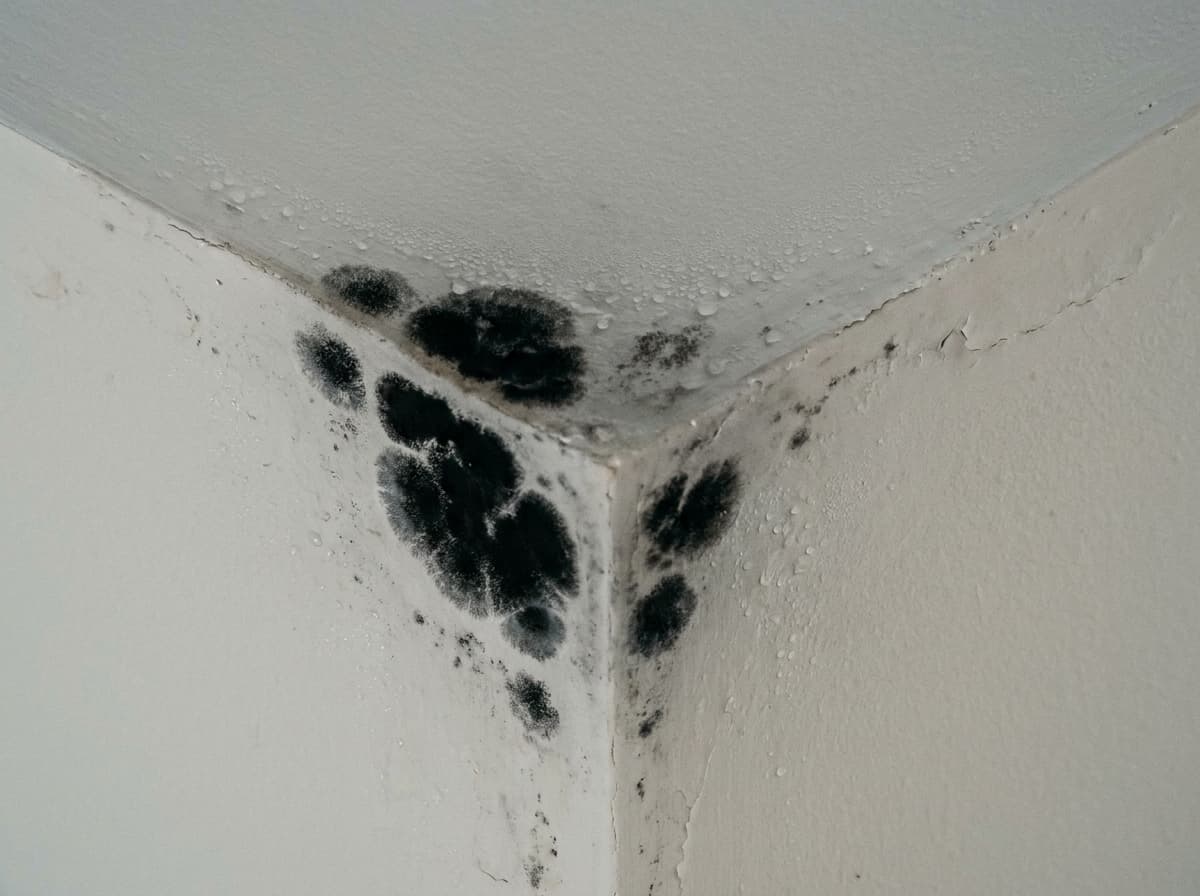
Bathrooms are the room most prone to mould, and for a simple reason: a hot shower or bath releases a large amount of moisture into a small, frequently cold and poorly ventilated space. That moisture lands on cold tiles, sealant, grout, window reveals and ceilings — and if it does not clear quickly, mould follows.
The good news is that bathroom mould usually responds well to better ventilation and a few easy habits.
Why bathrooms grow mould
- Concentrated moisture. Showering and bathing produce steam in bulk.
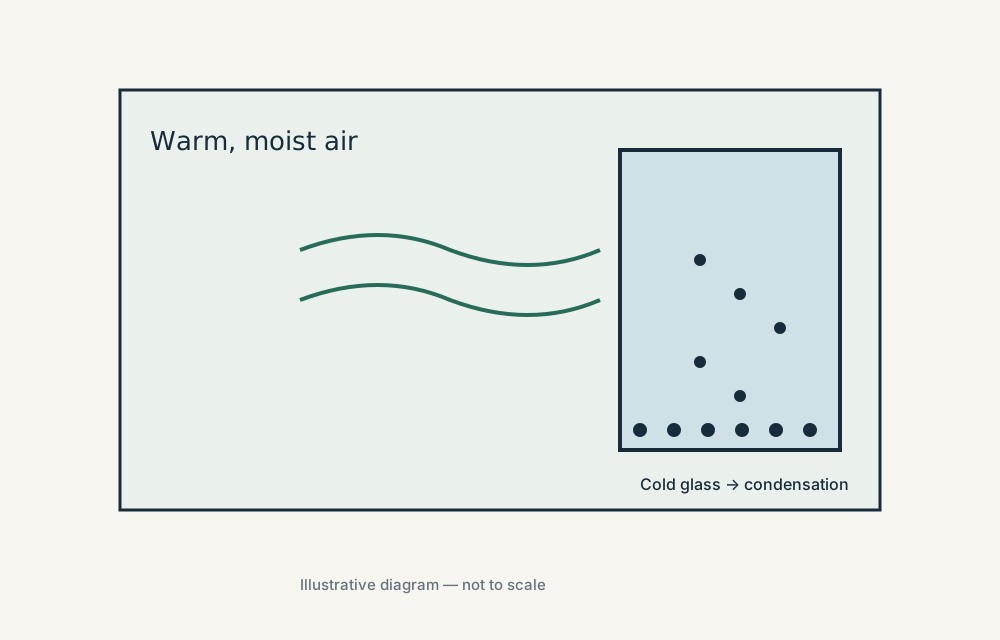
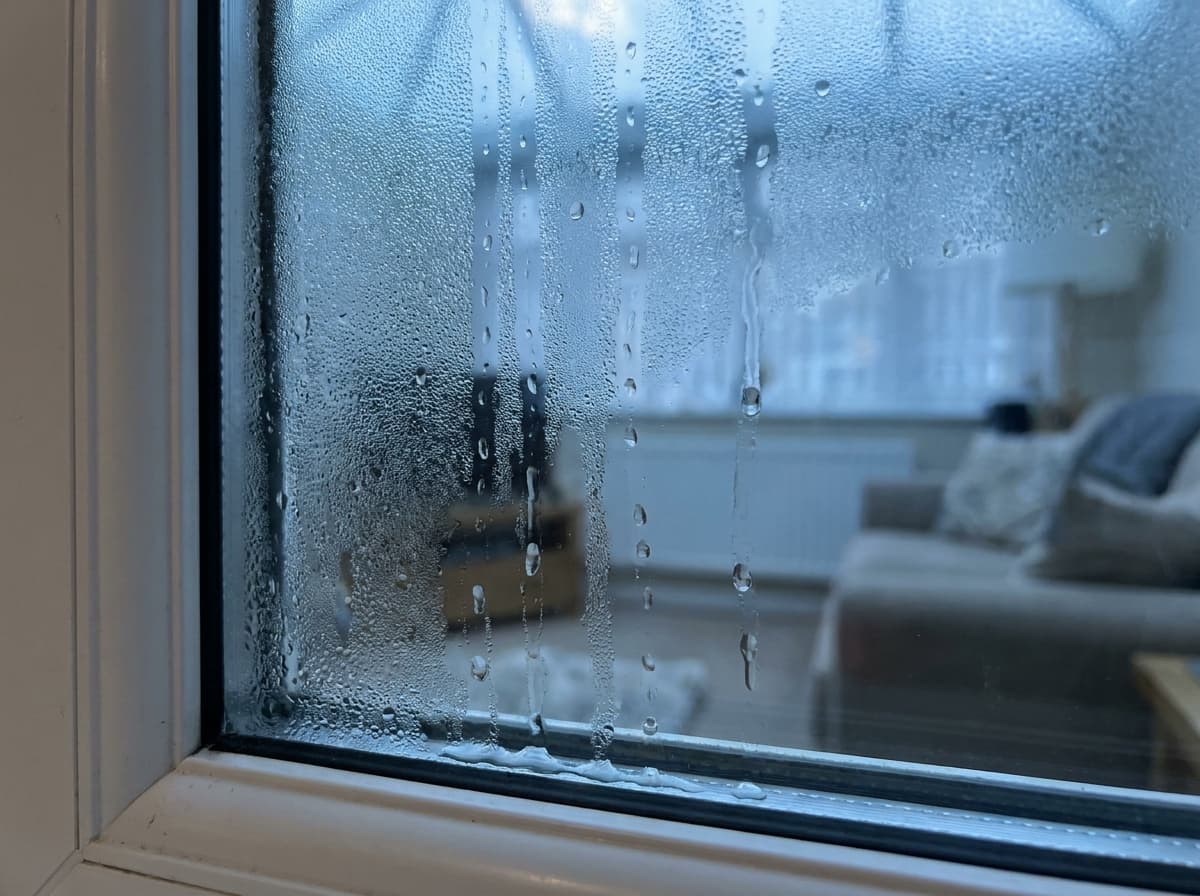
- Cold surfaces. Tiles, glass and sealant are cold and stay cold, so moisture condenses on them readily — see what causes condensation.
- Weak or missing ventilation. Many bathrooms have only a small window or an underpowered extractor fan.
- Lingering dampness. Sealant, grout and the gaps around a shower hold moisture long after you have finished.
How to stop mould in the bathroom
- Use the extractor fan — and run it on. Switch it on before or as you start, and leave it running for a while afterwards to clear the moisture. A fan that barely moves air is worth upgrading.
- Open a window during and after showering or bathing, weather permitting, to help moist air escape.
- Keep the door closed while bathing and for a while after, so humid air does not drift into colder bedrooms and hallways.
- Wipe down wet surfaces. A quick wipe of the shower screen, tiles and any standing water removes a lot of the moisture before it can condense elsewhere.
- Leave shower doors or curtains open afterwards so they can dry rather than trapping damp.
- Deal with existing mould safely — see below.
Cleaning bathroom mould safely
Follow the same safe method as elsewhere in the home:
- Ventilate the room and wear protective gloves (and ideally a mask and eye protection).
- Do not brush or scrub dry mould — dampen it gently first so you do not disturb spores.
- Wipe the surface with a suitable mould cleaner, following the label, and never mix cleaning products.
- Dry the surface thoroughly afterwards.
For a full walkthrough, see how to remove mould. Mould that has grown into silicone sealant can be stubborn; badly affected sealant sometimes needs removing and replacing once the area is clean and dry.
Important
Do not try to identify a mould species or its toxicity from a photo or its colour — that is not possible. Treat all bathroom mould with the same care, and remember that damp and mould can affect health, with some people more vulnerable than others (NHS/UKHSA). Our health risks article covers this conservatively.
Do not just re-seal or repaint over it
Replacing mouldy sealant or painting the ceiling can feel like a fix, but if the room stays damp the mould returns. Address the moisture first — ventilation above all — and only then redecorate or re-seal onto a clean, dry surface.
Tip
If one change is going to help most, it is ventilation. A properly working extractor fan, used every time and left running afterwards, transforms most bathroom mould problems.
Use the Mould Risk Checklist to check the other moisture pinch points in your home, and see how to prevent mould for the whole-home picture.
Try a related tool
Frequently asked questions
Because cleaning removes the mould but not the moisture that feeds it. Bathrooms produce a lot of steam in a small, cold space, so unless you improve ventilation and clear that moisture quickly — extractor fan, open window, door closed, surfaces wiped — the mould returns.
Sources
- NHS: Can damp and mould affect my health? · UK · accessed 27 October 2026
DampSense Editorial Team
Research & editorial
Our editorial team researches UK building-moisture topics using government guidance, public-health sources and established building-science references. We write to help homeowners and tenants make informed decisions, and we flag where professional assessment is needed.
Credentials & limitations: Research-led editorial team. We are not chartered surveyors; our guides are general information, not a professional building survey.