Mould
Mould in the Bedroom
Cold external walls, furniture pushed against them and the moisture we breathe out overnight make bedrooms a common home for mould. Small changes help a lot.
In short
Bedrooms get mouldy because they combine three things: cold external walls, furniture pushed flat against those walls trapping cold stagnant air, and overnight moisture from breathing in a closed room. Mould typically appears in cold corners and behind wardrobes. The fixes are to pull furniture off external walls, ventilate (a little each morning), and keep the room warm enough that surfaces do not stay cold and damp.
Key takeaways
- Bedrooms often get mould on cold external walls, in corners and behind furniture.
- Furniture pushed flat against a cold wall traps stagnant air and encourages mould — leave a gap.
- We add moisture to the air overnight simply by breathing, so morning ventilation helps.
- Gentle background heat keeps surfaces warm enough to resist condensation.
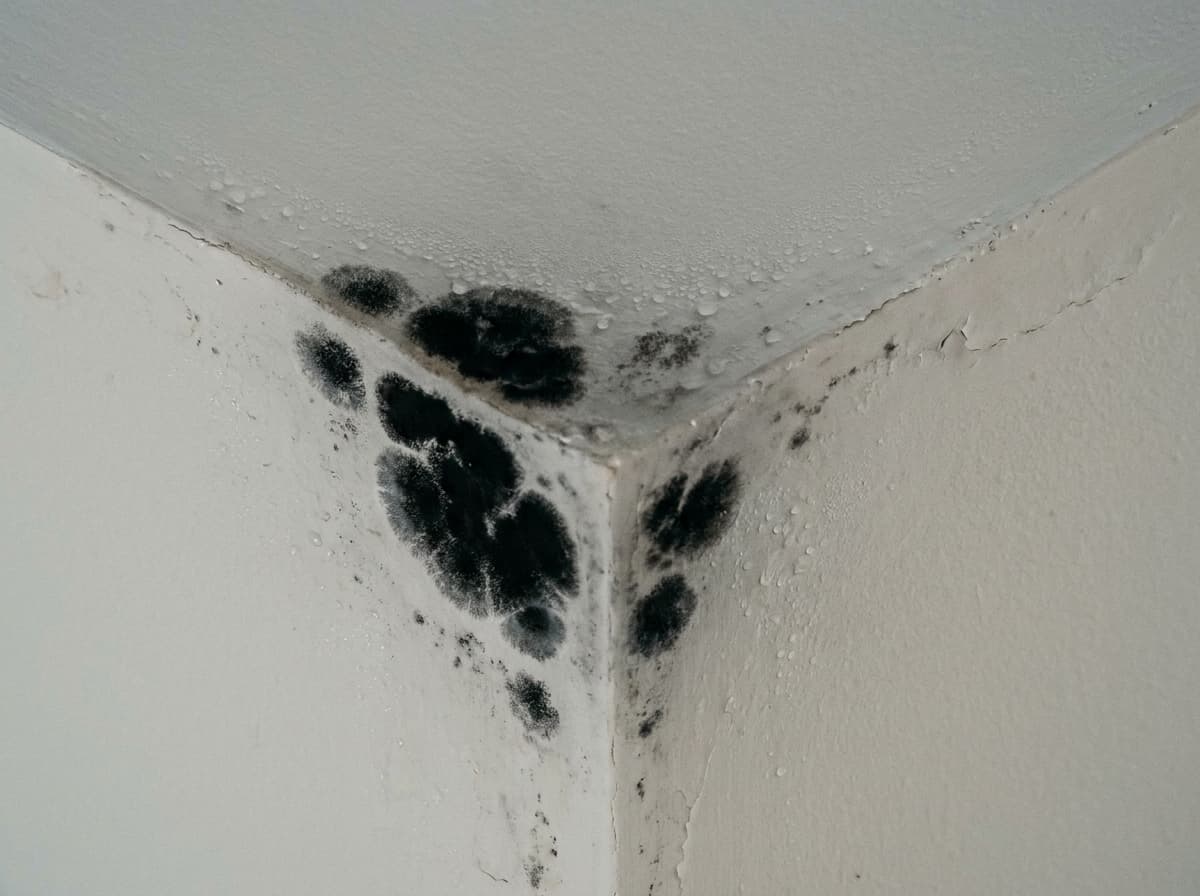
Bedrooms are a surprisingly common place to find mould — typically in the corners of cold external walls, around window reveals, and behind wardrobes or headboards. It usually comes down to three overlapping factors.
Why bedrooms get mouldy
Cold external walls
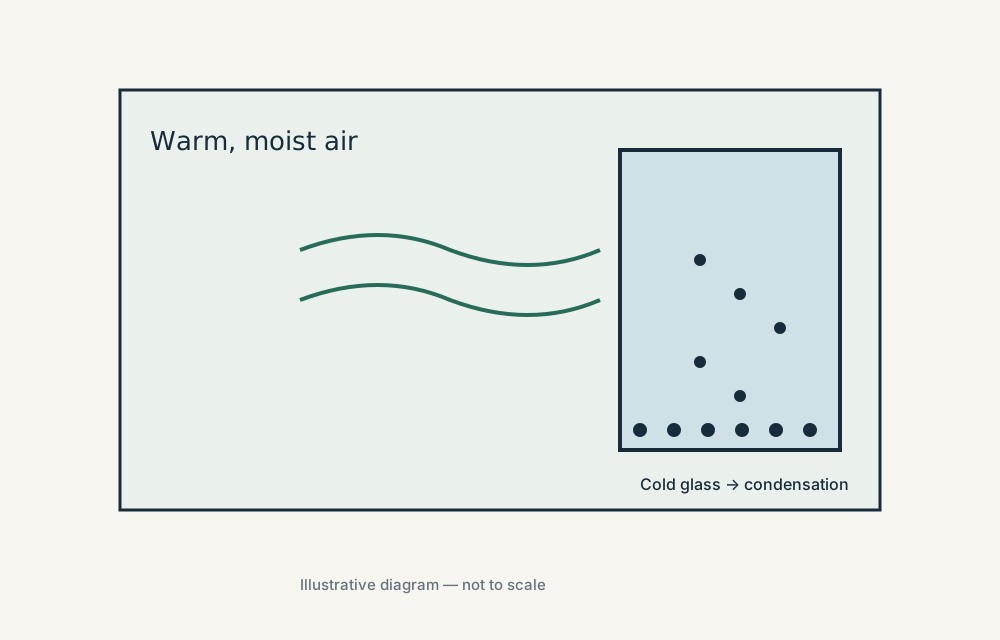
Bedrooms often sit on an external corner of the house, with two or more outside walls. Those walls get cold, and cold surfaces are where moisture in the air condenses — the mechanism behind most household mould (see what causes condensation). North-facing bedrooms and rooms over an unheated space are particularly prone.
Furniture against the wall
A wardrobe, chest of drawers or bed pushed flat against a cold external wall creates a pocket of still, cold air behind it. Warm room air cannot circulate there to keep the wall warm, so the surface stays cold and moisture lingers — which is exactly why mould so often appears behind bedroom furniture, hidden until you move it.
Overnight moisture
We release moisture into the air simply by breathing, all night. In a closed bedroom — door shut, window closed, perhaps two people sleeping — that moisture builds up with nowhere to go. By morning the air is humid and the coldest surfaces are damp.
What to do about it
- Pull furniture off external walls. Leave a few centimetres' gap so air can circulate and keep the wall warmer. Where you can, place large furniture against internal walls instead.
- Ventilate in the morning. A short burst of open window after waking clears the moisture that built up overnight. Use trickle vents and do not block air bricks.
- Keep the room gently warm. A cold bedroom has cold surfaces. Low, steady background heat in cold weather keeps surfaces above the point where moisture condenses — our Dew Point Calculator shows how this works.
- Reduce moisture elsewhere. Avoid drying clothes in the bedroom, and keep the door closed when moisture is being produced in the bathroom or kitchen so it does not drift in.
- Clean existing mould safely — see how to remove mould — and then address the moisture so it does not return.
Important
Do not try to identify a mould species or its toxicity from a photo or its colour. Treat all mould with care. Damp and mould can affect health, and NHS and UKHSA guidance notes that some people — including children, older people and those with asthma, allergies or a weakened immune system — may be more affected. Our health risks article covers this.
Note
Do not simply paint over bedroom mould. On a cold, still-damp wall it will return and the paint may flake. Resolve the moisture first, then redecorate onto a clean, dry surface.
The quick wins
If you do just three things in a mouldy bedroom, make them: move furniture off the cold wall, air the room each morning, and add a little steady heat. Together these break the cold-and-damp cycle that lets mould take hold.
For the whole-home picture, see how to prevent mould, and use the Mould Risk Checklist to spot other weak points.
Try a related tool
Frequently asked questions
A wardrobe against a cold external wall traps a pocket of still, cold air, so warm room air cannot keep the wall warm. The surface stays cold and damp, and mould grows there — often unnoticed until you move the furniture. Leaving a gap behind it, and placing large furniture against internal walls, helps a lot.
Sources
- NHS: Can damp and mould affect my health? · UK · accessed 27 October 2026
DampSense Editorial Team
Research & editorial
Our editorial team researches UK building-moisture topics using government guidance, public-health sources and established building-science references. We write to help homeowners and tenants make informed decisions, and we flag where professional assessment is needed.
Credentials & limitations: Research-led editorial team. We are not chartered surveyors; our guides are general information, not a professional building survey.